There is a moment in a powerful breathwork session when the mind stops negotiating and the body starts speaking. Your chest warms, your hands tingle, a memory floats up without warning – and you realise you are not trying to fix yourself. You are letting your system complete something it has been carrying.
That is why the conscious circular breathing technique has become a cornerstone in modern breathwork spaces. One of the biggest Conscious Connected Breathwork benefits is that it is simple enough to learn, deep enough to transform, and potent enough that it deserves to be practised with real respect.
What the conscious circular breathing technique actually is
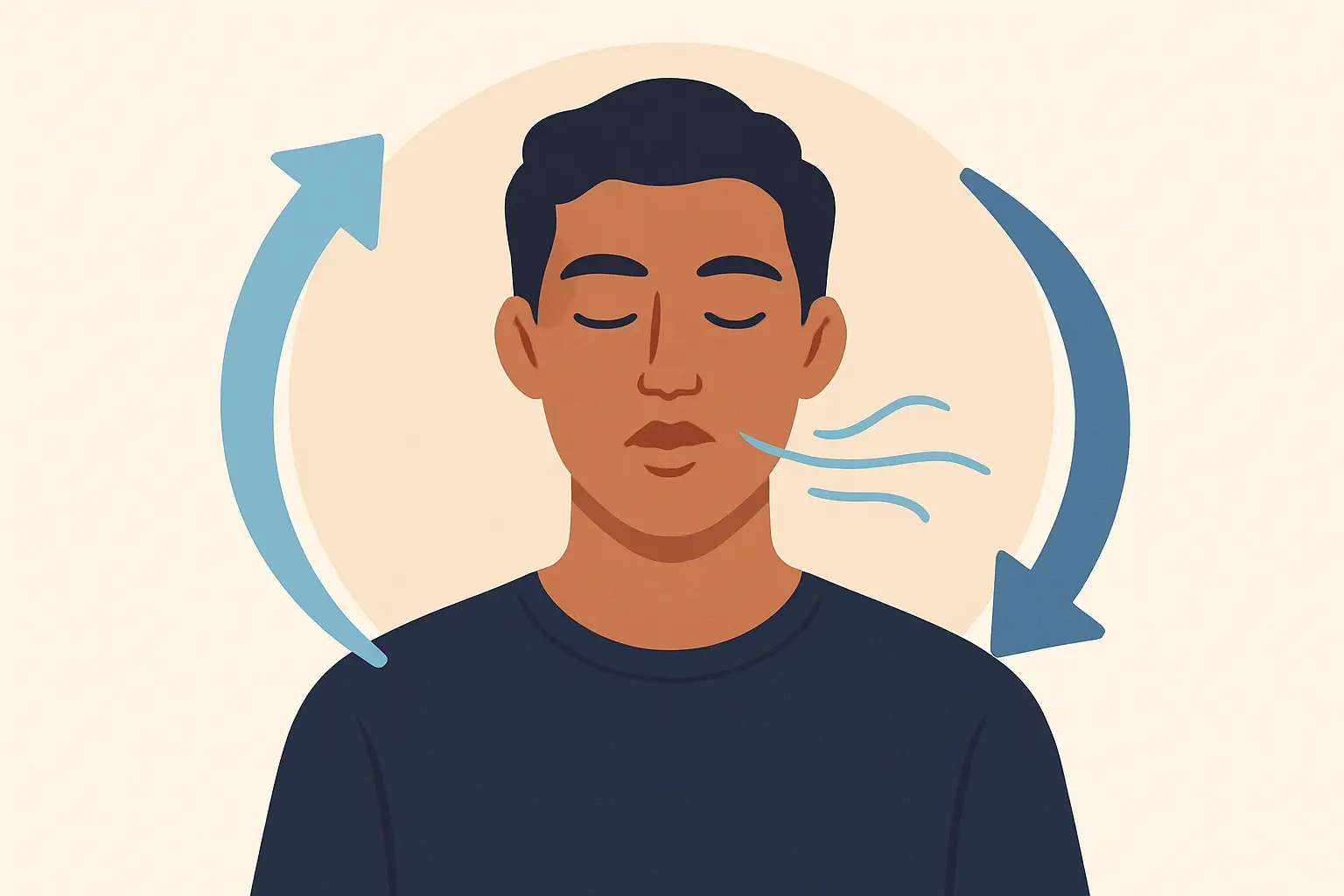
Conscious circular breathing explained simply: it is continuous, connected breath — an inhale that flows straight into an exhale, and an exhale that turns back into the next inhale, without pauses. The breath is intentional (conscious) and unbroken (circular). In practice, many people use a slightly fuller inhale than normal, with a relaxed exhale that is not forced.
If you are used to meditation styles that emphasise slowing down, this can feel counterintuitive at first. The point is not to sedate the nervous system. The point is to create enough internal movement that suppressed emotion, held stress, and unconscious patterning can surface safely and be metabolised through the body.
You can think of it as opening a channel. When the breath is connected, the body often follows with its own unwinding: shaking, temperature shifts, spontaneous tears, laughter, yawning, or a wave of calm that lands after intensity. None of these responses are “the goal”, but they are common signs that the system is processing.
Why it can feel so different from normal breathing
Most of us breathe in fragments. We pause without noticing, brace the belly, and treat the exhale as an afterthought. That is not a moral failing. It is a learned survival strategy. In day-to-day life, shallow breathing keeps sensation manageable and emotion at a distance.
The conscious circular breathing technique gently interrupts that strategy. When you remove the pauses, the body receives a different message: you are safe enough to feel what is here.
Physiologically, connected breathing shifts blood gases and nervous system tone. It can bring energy up quickly, and with it sensation. This is one reason people report tingling in the hands, lips, or face, or light cramping in the fingers (often called “tetany”). Those sensations can be unsettling if you do not expect them, but they are usually a temporary sign that the breath pattern has changed your internal chemistry.
Energetically and emotionally, the breath can act like a spotlight. What you have been managing quietly – grief, anger, longing, fear, joy – may rise to the surface in vivid colours. The “work” is not to analyse it in the moment, but to stay present, breathe, and allow the body’s intelligence to complete the cycle.
What you might experience (and what it means)
Some people meet breathwork as a soft return to themselves. Others meet it like a storm clearing the air. It depends on your history, your current stress load, your sensitivity, and how strongly you breathe.
In a session using the conscious circular breathing technique, you might experience emotional release (tears, laughter, sudden irritation), somatic discharge (shaking, heat, chills), imagery or memory fragments, a sense of spaciousness, or deep stillness afterwards. You might also experience very little and still benefit. A “quiet” session can be the nervous system testing safety.
A useful reframe for both clients and facilitators is this: breathwork is not a performance. There is no prize for intensity. There is also no failure in subtlety. The real measure is whether you leave more honest, more connected to your heart, and more resourced in your body.
A simple way to practise it (safely and respectfully)
If you are new, start shorter than you think you need. Ten minutes can be plenty.
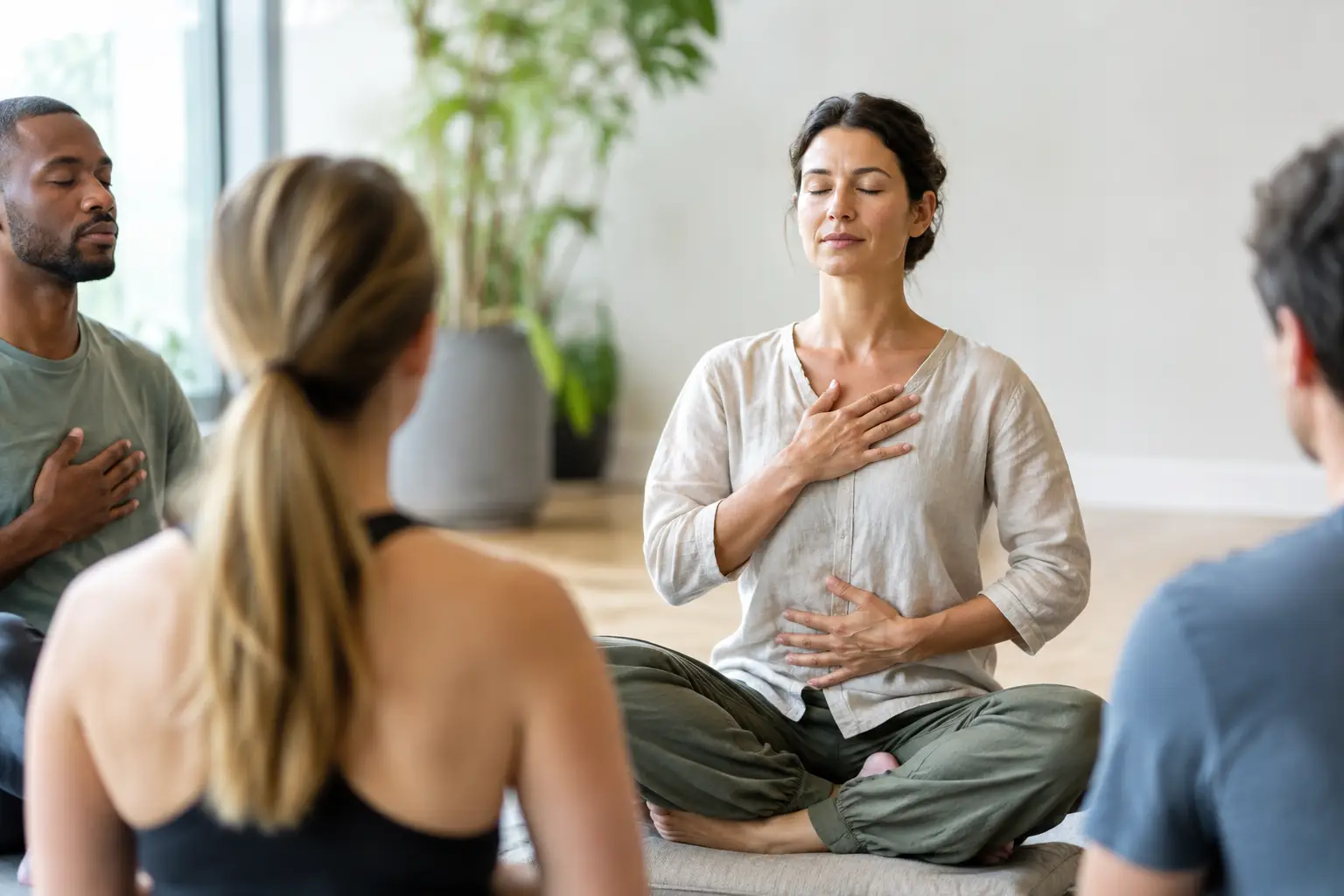
Set yourself up lying down with a cushion under the knees, or seated with a tall spine. Place one hand on the chest and one on the belly. Begin with a steady inhale through the mouth, then a relaxed exhale through the mouth, joining them so the breath keeps moving in a smooth loop.
Aim for a breath that is full but not aggressive. If you feel yourself forcing, soften the exhale first. If you feel dizzy or panicky, slow the pace and reduce the depth. Your nervous system learns through pacing, not through pushing.
At the end, allow at least three minutes of stillness. This is where integration happens. Your body will often reorganise quietly after the breath stops.
Common mistakes that change the experience
Many beginners accidentally hold tension in the jaw and throat. A soft jaw and a relaxed tongue can shift everything. Another common pattern is “over-breathing” – chasing sensation, breathing too big too fast, then feeling ungrounded. More breath is not always better. Consistency is.
Finally, people sometimes keep one foot in control: breathing circularly, but mentally narrating and judging each moment. If you can, give yourself permission to be guided by sensation rather than commentary.
When breathwork is not the right tool (or needs adaptation)
This work can be profoundly healing, and it is not universal. It depends.
If you are pregnant, have glaucoma, uncontrolled high blood pressure, a history of aneurysm, severe cardiovascular conditions, or a seizure disorder, connected breathwork may be contraindicated or require specialist guidance. The same is true if you are in acute psychosis or experiencing significant psychiatric instability.
For trauma survivors, conscious circular breathing can be supportive, but it must be approached with choice, pacing, and consent. Sometimes the most trauma-informed option is a gentler breath pattern, shorter rounds, eyes open, or a seated posture. Safety is not just physical. It is emotional and relational.
If you are a wellness professional reading this, that nuance matters. Breathwork is not “one technique fits all”. The art is in knowing when to intensify, when to slow down, and when to offer an entirely different door into regulation.
Why facilitation is a skill, not a vibe
Breathwork spaces are often marketed with beautiful language, but the quality of a session comes down to competence. A skilled facilitator tracks breath patterns, reads body cues, and holds a container that is both compassionate and boundaried.
In practice, that means knowing how to:
- cue the breath in a way that supports different nervous systems
- recognise when someone is moving into overwhelm and help them downshift
- work ethically with touch, consent, and group dynamics
- support emotional release without turning it into theatre
- close sessions properly so people can return to their lives grounded
If you want to offer 1:1 sessions, couples sessions, groups, sacred circles, workshops, or retreats, you need more than a personal experience of transformation. You need a method you can teach, safety protocols you can stand behind, and the confidence to hold whatever arises.
This is also where professional readiness becomes practical. If you intend to charge for your work, you may want a recognised training pathway that supports insurance applications and gives you structure for session planning, screening, and aftercare.
Bringing heart into technique
The “how” of connected breathing is mechanical. The “why” is devotional. People are not coming to you because they want a new breathing drill. They are coming because something in them is ready to soften, to grieve, to forgive, to feel joy again, or to step out of survival mode.
A heart-based approach does not mean being ungrounded. It means you hold people as whole. You honour the human behind the release. You respect the nervous system’s timing. You do not rush catharsis, and you do not pathologise stillness.
In Hawaiian-inspired breath traditions, there is an emphasis on breath as life force and on the heart as a centre of truth. When that spirit is brought into a modern conscious circular breathing technique, the work becomes less about “breaking through” and more about coming home.
If that resonates, and you feel the call to serve your community, training can be a way to step into leadership with integrity. Nalu Breathwork offers a structured pathway for those who want to become confident facilitators while staying rooted in heart-led, safety-first practice: Nalubreathwork.com.
The real transformation is what happens afterwards
A beautiful session is not the end of the story. The next day when you choose a different response, speak a truth you have been swallowing, or finally rest without guilt – that is the breathwork doing its quiet work.
So if you practise the conscious circular breathing technique, let it be an act of relationship. Relationship with your body, your grief, your joy, your boundaries, your inner child, your future self. Take it slowly enough that trust can grow.
Your breath already knows the way back to you. Your job is to keep showing up, one honest inhale at a time.