If you are feeling called to train as a breathwork facilitator, the first question is rarely just about time. It is usually really asking, how long until I feel confident holding others safely? How long until I can lead sessions that create real change? And how long until this becomes a grounded, professional part of my work?
The honest answer is that how long is breathwork facilitator training depends on the depth of the course, the format, and what you want to do with it afterwards. Some trainings are very short and focus on personal experience. Others are built to prepare you to guide 1:1 sessions, couples work, group journeys, workshops and retreats with skill, safety and presence.
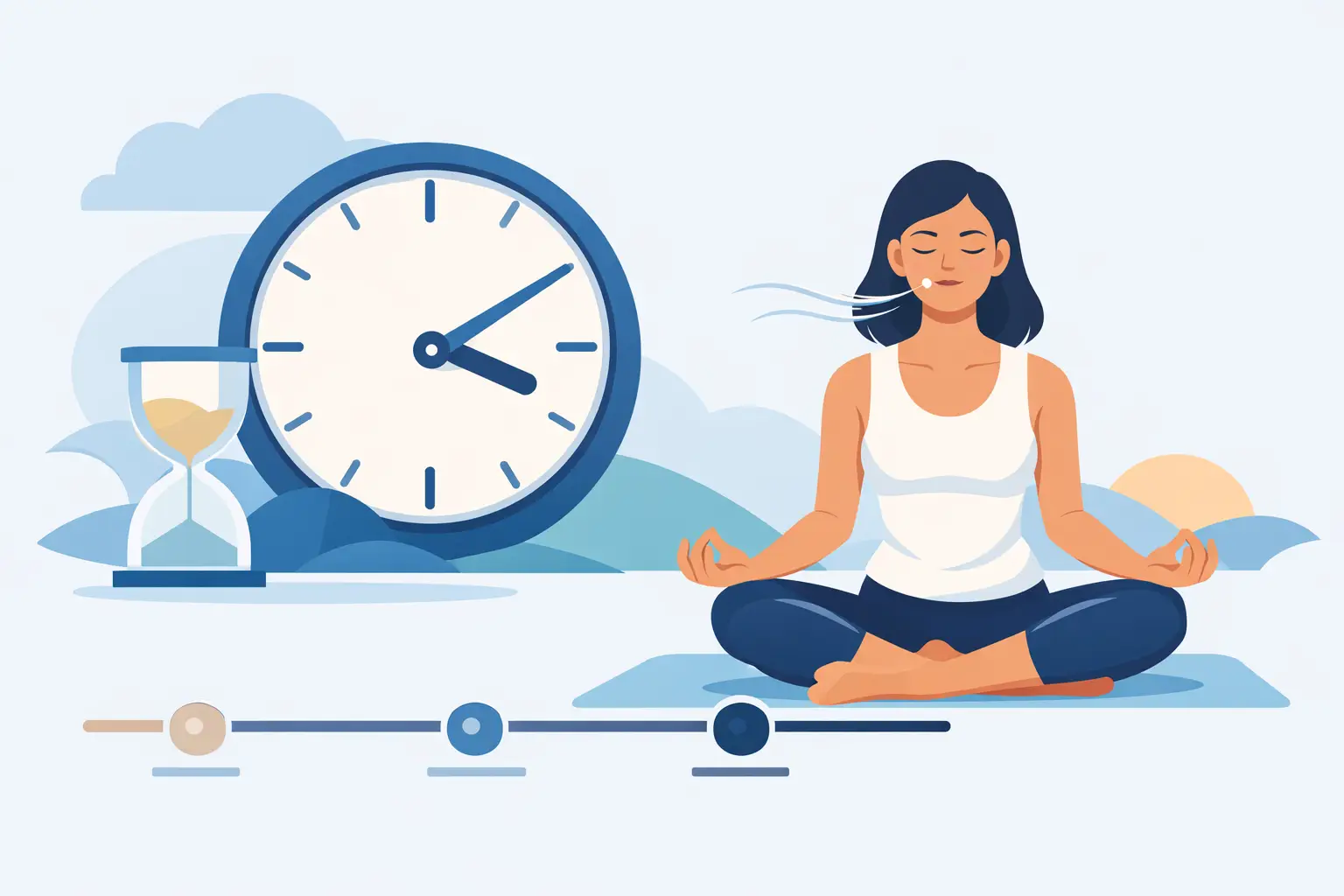
For most people, breathwork facilitator training can take anywhere from a few days to several months. A retreat-based certification may happen over an immersive long weekend or several days in person, while a more comprehensive online pathway might unfold over weeks or months of self-paced study, practice and integration. Neither is automatically better. The right path depends on how you learn, how quickly you integrate, and whether you are looking for a taster or a true professional pathway.
How long is breathwork facilitator training in practice?
In practice, there are three broad timelines you will come across.
A short introductory training might last one to three days. This can be enough to understand the basic mechanics of conscious connected breathing, have your own experience, and begin exploring space-holding. For personal growth, this may feel powerful. For professional readiness, it is often only the beginning.
A retreat-style certification commonly runs over several immersive days. This format can accelerate learning because you are fully inside the work. You are breathing, witnessing, practising, receiving feedback and being held in community all at once. For many heart-led practitioners, this style creates deep embodiment in a short space of time.
Then there are longer certification programmes delivered online, in person, or as a blend of both. These often take anywhere from six weeks to six months, sometimes longer if they are self-paced. That extra time is not there to make the training feel more impressive. It is usually there because facilitating breathwork well asks for more than memorising a sequence. It asks for maturity, nervous system awareness, emotional steadiness and repeated practice.
What actually affects the length of training?
The biggest factor is the outcome the training promises. If a course is designed simply to introduce breathwork, it may be short. If it is designed to help you become insurable, professionally competent and ready to guide paying clients, it usually needs more substance.
The teaching scope matters as well. A course that covers one breathing pattern in a basic way will be quicker than a training that includes session structure, contraindications, trauma awareness, ethics, client care, group facilitation and multiple breath techniques. If you want to lead not just individuals but also couples, circles or retreats, the learning curve naturally expands.
Format changes timing too. In-person retreats compress learning into a focused container. Online study spreads it out, which suits people balancing family, work and existing client commitments. Self-paced learning can be wonderfully flexible, but it also relies on your discipline. A course you could technically finish in eight weeks might take six months if life is full.
There is also a quieter factor that few people mention enough – integration. Breathwork can move grief, stress, old emotion and profound insight. A strong training does not rush past that. It gives space for your own healing journey as well as your facilitator development, because the safest guide is not the one who knows the most scripts. It is the one who can stay present when real emotion enters the room.
Short training versus comprehensive certification
This is where discernment matters.
A short training can be beautiful if you are exploring breathwork for your own healing, or if you want to understand whether this path is really for you. It may also suit an experienced practitioner who already has strong trauma-aware space-holding skills and wants to add one specific modality.
But if your vision is to build a breathwork practice, lead transformational sessions and hold people through emotional release with confidence, a longer and more structured certification is often the wiser choice. The trade-off is simple. Shorter courses give speed. Longer trainings usually give depth, practice and safer professional foundations.
That does not mean the longest course is always the best. Some programmes stretch content without increasing quality. What matters is whether the hours are used well. Are you actually practising? Are you being assessed? Are you learning how to work with different client needs? Are you supported to move from student to facilitator?
How long until you feel ready to facilitate?
This is slightly different from how long the course lasts.
Some students complete an immersive training and feel ready to begin straight away with friends, practice clients or supervised sessions. Others finish the same training and choose to spend more time integrating before charging for their work. Both are valid.
Readiness comes from a blend of education, lived experience and supported practice. You need to understand the method, but you also need to trust your own presence. That usually develops through repetition. The first few sessions you guide are often where theory becomes real. You learn how to read the room, pace the journey, respond when someone becomes emotional and stay anchored in your own body.
A good training shortens this gap by giving you chances to practise before you are fully out on your own. That is one reason immersive and structured certification pathways tend to feel more complete. They do not just tell you what to do. They help you become the person who can do it.
What to look for beyond the timeline
If you are comparing trainings, do not choose on duration alone. Ask what the time includes.
Look at whether the course teaches safety, contraindications and ethical facilitation. See if there is real practice involved rather than passive watching. Notice whether the training includes support for holding 1:1 sessions, groups or both. If your goal is to create a business, check whether the certification supports professional outcomes such as insurance eligibility and the confidence to run paid sessions, workshops or retreats.
Lineage and teaching philosophy matter too. Breathwork is not just a technique. It is a relational practice. The way you are taught to hold people will shape every session you lead. A training rooted in care, emotional depth and facilitator competence will serve you far beyond the certificate itself.
For those seeking a heart-led pathway, Nalu Breathwork offers both immersive retreat training and online self-paced certification, which can be helpful if you want flexibility without losing depth. That kind of blended model often suits wellness professionals who need a professional route while still honouring their own rhythm.
Is faster always better?
Usually not.
Many purpose-driven practitioners are used to moving quickly. You may already hold space as a yoga teacher, coach, therapist or bodyworker, and you may be eager to add breathwork to your offerings as soon as possible. That enthusiasm is beautiful, but this is one area where speed should not come at the expense of embodiment.
Breathwork can open powerful states. Done well, it can support healing, clarity, release and reconnection. Held poorly, it can leave both facilitator and client overwhelmed. So while a shorter timeline may sound appealing, the better question is whether the training gives you enough grounding to lead responsibly.
Sometimes the most aligned path is an immersive retreat that lets you step away from daily noise and fully immerse yourself. Sometimes it is a self-paced course that lets you absorb the teachings steadily while continuing your current work. What matters is not racing to the finish line. It is choosing a training that allows your skill, confidence and heart to develop together.
So, how long should you expect?
If you want a realistic expectation, think in layers.
You can be introduced to breathwork in a day. You can complete a meaningful facilitator certification in several days or over a few months, depending on the model. And you may continue deepening as a practitioner for years, because the art of facilitation keeps maturing with every person you support.
That is not a flaw in the path. It is part of its beauty. Breathwork is both a modality and a way of being. The training gives you the structure, but your presence is what brings it alive.
If this work is calling you, do not just ask how quickly you can qualify. Ask what kind of facilitator you want to become, and let that answer guide your timeline.