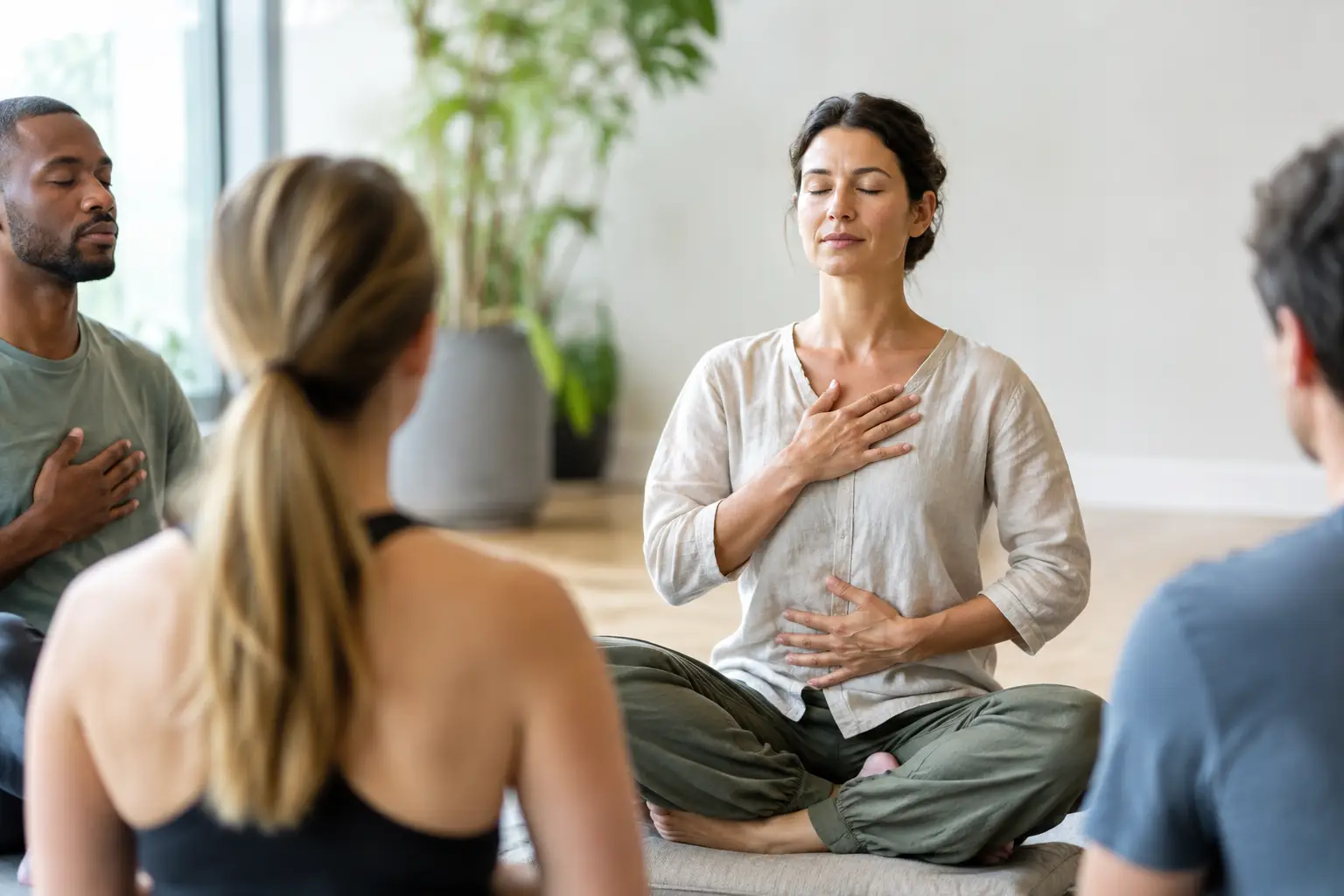
Someone may arrive at a breathwork session carrying years of grief, a nervous system shaped by stress, or a longing to feel at home in their own body again. That is why breathwork practitioner qualifications are about far more than learning a breathing pattern. They are about developing the presence, skill and discernment to hold a safe, compassionate space when real emotion begins to move.
For yoga teachers, therapists-in-training, coaches and heart-led souls called to healing work, breathwork can become a deeply meaningful professional pathway. Yet not every training offers the same depth, support or practical readiness. Knowing what to look for helps you choose a certification that serves both your future clients and your own growth as a facilitator.
What qualifications do you need to lead breathwork?
There is no single universal licence for breathwork practitioners in the UK or internationally. Breathwork sits within a varied wellbeing landscape, and requirements can differ according to the country, the style of breathwork, the setting and the insurer you work with.
That does not mean qualifications are unimportant. Quite the opposite. A recognised facilitator certification provides structured education, supervised practice and a clear scope for your work. It also gives prospective clients confidence that you have trained to guide sessions responsibly, rather than simply sharing a technique you have experienced yourself.
A quality breathwork qualification should prepare you to lead individual sessions, couples and groups while understanding the different dynamics each setting brings. Holding a circle of twenty people requires a different level of awareness from working one-to-one with someone processing a tender life transition. Both call for a grounded facilitator who can listen beyond words, notice what is happening in the room and respond without rushing to fix or interpret.
For many practitioners, certification is also a practical step towards professional insurance and running paid sessions, workshops, retreats, festivals or sacred circles. Insurers set their own terms, so always check their current requirements before offering services. Training completion alone is not an automatic guarantee of cover, but a well-structured certification is commonly an essential foundation.
The core skills behind credible breathwork practitioner qualifications
The breath itself may look simple. Facilitating a session safely is not. Strong training blends personal experience with teachable, repeatable skills, so you can guide others with confidence rather than relying on intuition alone.
A clear breathwork method
First, you need a method you understand in your body and can explain in accessible language. This includes how to introduce the breath, pace a session, use music and voice, offer modifications, and support integration afterwards.
Conscious circular breathing can create powerful physical, emotional and spiritual experiences. A practitioner needs to know how to guide the arc of that experience with care: inviting activation where appropriate, allowing space for release, then helping clients return to steadiness and presence. A distinctive method set can be especially valuable because it gives you options rather than a one-size-fits-all script.
At Nalu Breathwork, facilitators learn conscious circular breathing alongside Hawaiian-inspired practices including Ha Breath, Wave Breath and Healing Heart Breath. The aim is not to perform a perfect sequence. It is to meet the human being in front of you with a method that supports their intention and capacity on that day.
Safety, screening and scope of practice
Safety is the heart of professional facilitation. Before any session, a qualified practitioner should know how to gather relevant health information, identify contraindications and make informed decisions about whether breathwork is suitable in that moment.
Some clients may need medical clearance, a gentler approach or a referral to another professional. Certain health conditions, pregnancy considerations, recent surgery, severe mental health symptoms or medication can affect whether and how a person should practise an activating breathwork technique. This is not about creating fear. It is about respecting the body, avoiding assumptions and working within your competence.
A breathwork facilitator is not automatically a psychotherapist, doctor or trauma specialist. Breathwork may support emotional release and wellbeing, but it should never be presented as a replacement for medical or mental health care. Excellent training teaches you to state this boundary warmly and clearly, and to recognise when a client would be better supported by a suitably qualified clinician.
Trauma-aware space holding
Many people seek breathwork because talk alone has not helped them access what they feel. That possibility is powerful, but it requires care. Trauma-aware facilitation means prioritising choice, consent, pacing and emotional safety rather than pushing for catharsis.
You should learn how to offer invitations rather than commands, how to check in without disrupting someone’s process, and how to support a participant who becomes overwhelmed or disconnected. It also means understanding that tears, shaking, laughter, stillness and no visible response can all be valid. Transformation is not measured by how dramatic a session looks.
The facilitator’s own nervous system matters here too. Clients often sense whether the person leading them is calm, present and able to stay with intensity. Personal breathwork practice, reflective supervision and ongoing self-development are not optional extras. They are part of becoming trustworthy.
Practical facilitation experience
Watching lessons is useful. Guiding real people is where theory becomes embodied skill. Look for a training that includes opportunities to practise leading sessions, receive feedback and witness a range of client responses.
You may begin by guiding a friend through a short practice, then move towards one-to-one sessions and small groups. Over time, you learn how your voice lands, where you tend to over-explain, how to work with silence and when to simplify. A supportive training community, or Ohana, makes that learning feel less isolating.
Certification matters, but discernment matters too
A certificate can demonstrate that you completed a course. It cannot, by itself, tell you whether the teaching was ethical, the assessment was meaningful or the modality fits your values. When comparing breathwork facilitator training, ask practical questions.
How long is the training, and does it allow time for integration? Is there live guidance, feedback or mentoring alongside self-paced learning? Does the curriculum cover client screening, consent, contraindications, ethics and aftercare? Will you practise facilitating, not only receive sessions? Is there a clear explanation of what you can offer professionally after qualifying?
Also consider the teacher’s experience and the culture of the school. You are learning how to hold people at vulnerable moments, so the training itself should model respect, boundaries and emotional maturity. Be wary of programmes that promise instant expertise, guarantee dramatic healing outcomes or encourage you to work beyond your scope.
The right qualification may look different depending on your existing background. A qualified counsellor may already have strong relational skills but need a clear breathwork methodology and embodied facilitation practice. A yoga teacher may be confident leading groups but need deeper training in screening, trauma awareness and integration. A new practitioner may benefit from a programme that develops all of these foundations step by step.
From certification to a sustainable practice
Once qualified, your learning continues through every session you lead. Begin within the boundaries of your training. Create clear client forms and agreements, maintain appropriate insurance, keep records securely and communicate honestly about what breathwork can and cannot offer.
It can be tempting to launch immediately with large events. There is value in beginning smaller. One-to-one sessions and intimate circles allow you to refine your intake process, language and pacing. As your confidence grows, you may choose to lead couples sessions, workshops, retreat experiences or larger community gatherings.
Your work does not need to imitate anyone else’s. Perhaps breathwork will complement your massage practice, coaching work, yoga classes or retreat leadership. Perhaps it will become the centre of a new vocation. What matters is that your offering remains aligned with your training, values and capacity.
A meaningful breathwork qualification gives you more than letters after your name. It teaches you how to be with people as they reconnect with their breath, their truth and their inner wisdom. Choose training that asks something of you too, then let your own grounded presence become part of the healing your clients feel.