If you are searching for breathwork certification Australia, chances are you are not simply looking for another course to add to your shelf. You are looking for a path that feels aligned – something that can deepen your own healing while also preparing you to hold others with real skill, safety and heart. That is a very different decision from signing up to a weekend workshop.
Breathwork has grown quickly across the wellness space. You can now find short introductions, online intensives and facilitator trainings in many styles. That is exciting, but it also means discernment matters. Not every certification will equip you to guide clients through emotional release, trauma responses, nervous system shifts and the practical realities of running paid sessions.
Why breathwork certification in Australia deserves careful thought
Australia has a strong wellness community, with yoga teachers, coaches, massage therapists, retreat leaders and therapists-in-training all seeking modalities that create genuine transformation. Breathwork can absolutely do that. It can help people move grief, soften stress, reconnect to their bodies and access clarity that talking alone sometimes cannot reach.
But the power of the work is exactly why the training matters.
A credible facilitator pathway should do more than teach a breathing pattern. It should teach you how to create a safe container, read what is happening in the room, support different nervous systems, and respond calmly when someone moves into tears, anger, numbness or deep insight. If a course focuses only on inspiration and misses competence, that is a red flag.
For many people considering becoming a breathwork facilitator in Australia, there is also a practical layer. You may want a qualification that supports professional readiness – something that helps you work towards insurance, offer paid sessions, and lead one-to-one, couples or group experiences with confidence. A beautiful training experience is not enough on its own if it leaves you uncertain about what happens next.
What a strong breathwork certification Australia course should include
The best trainings blend inner journey with grounded teaching. You want both. Personal transformation is important because breathwork facilitators should know the terrain from the inside. Yet your own healing is only one part of the path. Teaching is a separate skill, and it needs structure.
Look first at the method itself. Does the school clearly explain what style of breathwork you will be learning? Some trainings are rooted in conscious circular breathing, while others bring in additional breath patterns or spiritual frameworks. Neither is automatically better. What matters is whether the method is coherent, teachable and supported by a clear rationale.
Then look at safety. This should never be a vague promise. A serious training will cover contraindications, client screening, session preparation, integration, emotional release, trauma awareness and the ethics of referral. Breathwork can be profound, but it is not a replacement for every form of care. Good facilitators know the boundaries of their role.
Teaching practice is another essential piece. You should have opportunities to observe, practise and receive feedback. Reading modules or watching videos can help build knowledge, but facilitating breathwork is relational. You need to learn how to use your voice, pace a session, hold silence, support activation and close the space well.
A well-rounded certification should also address real-world application. Can you lead one-to-one sessions? Are couples sessions covered? What about groups, workshops, retreats or sacred circles? If your goal is to bring this work into an existing practice or build something of your own, these details matter.
Retreat training, online learning or both?
This is where it depends on how you learn best and what season of life you are in.
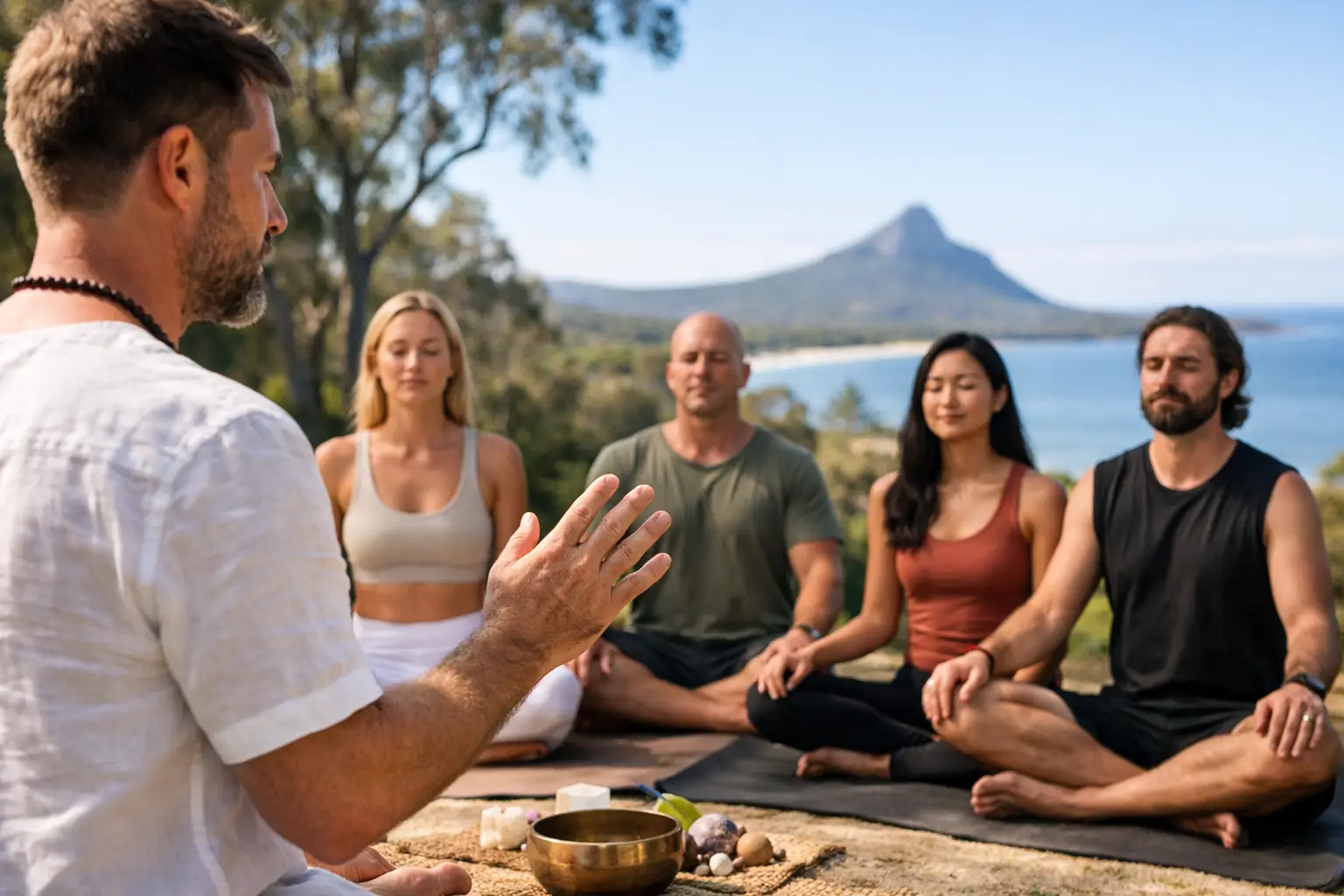
In-person retreat training offers immersion. You step out of everyday routines, enter a shared field with your soul tribe, and often experience the work more deeply because you are fully present. For many future facilitators, retreat settings accelerate confidence. You can witness others, receive live feedback and feel the nuance of group space-holding in a way that is hard to replicate on screen.
Online self-paced training, on the other hand, offers flexibility. If you are balancing family, clinic hours or a coaching business, this format can make certification possible when a retreat is not. It also allows time to integrate slowly, revisit material and practise in your own rhythm.
Neither format is automatically superior. The stronger question is whether the training has been designed intentionally. An excellent online course will not simply hand you recordings and leave you to it. An excellent retreat will not rely on emotional intensity without giving you a framework. Many of the most supportive pathways now combine both – immersive learning with structured coursework and ongoing integration.
Questions to ask before you enrol
Before choosing a programme, sit with a few honest questions.
Who is teaching the training, and what is their depth of experience? A founder or lead trainer with a long-standing background in health, wellbeing and facilitation usually brings more maturity to the work. Lineage and lived experience matter, especially in modalities that are both energetic and therapeutic in feel.
What kind of facilitator will you become at the end? This sounds obvious, yet many people skip it. Some certifications are primarily for personal development. Others are built for professional practice. Make sure the stated outcome matches your intention.
How much supervised practice is included? A course may be beautifully branded and still be light on actual teacher training. If there is very little space to practise leading sessions, you may complete the programme inspired but underprepared.
Will the certification support you in working professionally? This may include insurance-readiness, ethical guidelines, client frameworks and clear scope of practice. If monetising your work matters to you, do not treat this as a side question.
And finally, does the training feel aligned in spirit? Technique matters, but so does resonance. If you are called to heart-led work, community and transformation that honours emotional depth, choose a school that genuinely embodies those values rather than borrowing the language.
The difference between a healing experience and facilitator training
This is one of the biggest points of confusion in the industry.
A powerful breathwork retreat can change your life. It may crack your heart open, move old grief and reconnect you to joy, peace or purpose. That experience can be sacred and unforgettable. But being deeply affected by breathwork does not automatically make someone ready to facilitate it.
Facilitator training asks more of you. It asks you to stay present when someone else is moving through intensity. It asks you to balance intuition with structure. It asks you to hold the room without making the session about your own process. That requires maturity, preparation and repetition.
For this reason, it is wise to be cautious of certifications that promise quick mastery. Breathwork is simple in one sense – we are working with breath, body and awareness. Yet the art of guiding others safely is layered. A good school will honour that rather than oversell speed.
Choosing a path that serves both soul and profession
If you are a yoga teacher, coach, bodyworker or therapist-in-training, breathwork can become a beautiful extension of your existing work. It can bring emotional release into a practice that has mostly focused on mindset or movement. It can deepen client outcomes and create experiences that people genuinely remember.
If you are starting from a more intuitive or spiritually led place, certification can also give shape to your calling. The right training helps you turn care into craft. It supports you to hold people with confidence rather than relying only on instinct.
This is where a heart-based school can make a real difference. When a programme combines sacred depth with clear method, students do not have to choose between spirituality and professionalism. They can learn to lead with compassion while also developing the competence required for paid work. That balance is what many people are really searching for, whether they say it directly or not.
For those drawn to a Hawaiian-inspired, lineage-led approach, Nalu Breathwork is one example of a certification pathway that speaks to both sides of the journey – personal transformation and professional readiness. That combination can be especially supportive for practitioners who want to guide one-to-one sessions, couples work and groups with both warmth and clarity.
A final word on readiness
You do not need to be perfectly healed before you train. Most people come to this work because breath changed something in them first. What you do need is willingness – willingness to learn, to practise, to receive feedback and to honour the responsibility of holding others.
The right certification will not just teach you how to lead a breathing sequence. It will help you become the kind of facilitator whose presence feels safe, grounded and deeply human. And when that happens, your work can become more than a service. It can become a place where people remember how to breathe, feel and come home to themselves.