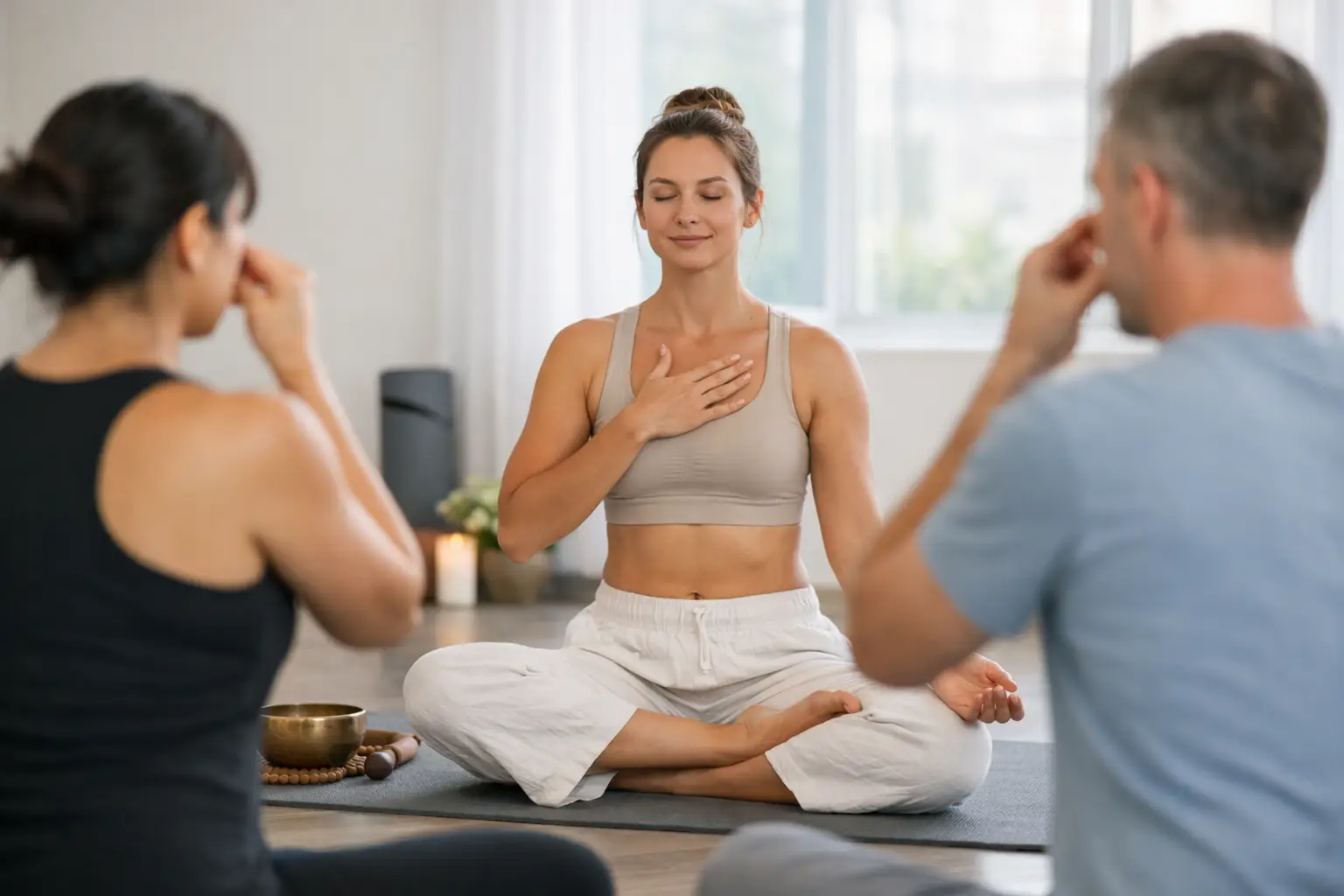
A yoga teacher breathwork career example is rarely about abandoning the mat, changing your whole identity, or suddenly filling a retreat in Bali. More often, it begins with a teacher noticing a familiar moment after class: students linger in Savasana, emotions close to the surface, wanting more space to feel, release and reconnect. Breathwork can become the bridge between teaching movement and holding deeper transformation.
For yoga teachers who feel called to support clients beyond a 60-minute flow, breathwork offers a meaningful professional pathway. It can bring greater depth to private work, a new format for workshops, and a way to create circles and retreats rooted in connection. Yet it also asks for more than a beautiful playlist and an invitation to breathe deeply. It asks for training, clear boundaries and the capacity to hold people with skill and heart.
A yoga teacher breathwork career example in real life
Meet Maya, a composite example based on the path many yoga teachers take. She had taught vinyasa and restorative yoga for four years, mainly in studios and community spaces. Her classes were well attended, and students loved her steady presence, but she felt a growing pull towards the emotional experiences that arose when people slowed down.
A student once told her after a restorative class, “I finally feel like I can breathe.” Maya knew that was not simply a compliment about her sequencing. She could see that her students were carrying stress, grief, pressure and stories their bodies had not had room to express.
Initially, Maya added five minutes of gentle breath awareness at the end of class. That was appropriate for her existing skillset, and it helped her learn what her community responded to. But she did not position those moments as therapeutic breathwork or attempt to facilitate intense emotional release. She recognised that conscious circular breathing and deeper breathwork journeys require a different level of knowledge, screening and space-holding.
She chose to train as a Breathwork Facilitator. Her aim was not to make yoga less important. It was to create a second, complementary strand of work that allowed her to meet clients more fully.
From yoga classes to a clear professional offering
After certification, Maya began simply. She offered one 90-minute small-group breathwork session each month alongside her weekly yoga timetable. The session had its own description, booking process and client information. Rather than presenting breathwork as a quick fix, she explained that it was a supported practice for self-awareness, emotional processing and reconnection.
She also began offering one-to-one sessions. This suited clients who were curious but nervous about a group setting, as well as those who wanted more personalised support. Over time, couples sessions became another natural part of her work. Her yoga teaching had given her confidence in guiding groups, but individual and couples breathwork taught her something more nuanced: each person needs to be met where they are, not rushed towards an outcome.
Within a year, Maya’s work had evolved into a balanced practice. She still taught yoga because she loved it. Breathwork had become her specialist offering, bringing in clients who wanted deeper support and giving returning yoga students a new way to work with her.
Her work included:
- weekly yoga classes for movement, regulation and community
- private breathwork sessions for more focused support
- monthly group journeys for her local soul tribe
- occasional half-day workshops combining gentle yoga, reflection and breath
- a longer-term vision to co-host heart-led retreats
This is not the only model. Some teachers make breathwork a central part of their business and reduce their studio timetable. Others keep it as a powerful addition to yoga, coaching, bodywork or retreat leadership. The right shape depends on your energy, experience, audience and appetite for running a business.
Why breathwork can deepen a yoga teaching career
Yoga and breathwork are related, but they are not interchangeable. In many yoga traditions, breath is already a pathway towards presence and inner connection. Structured breathwork facilitation can offer a dedicated container where clients are invited to stay with sensation, emotion and inner experience for longer.
For a yoga teacher, this can create a more coherent client journey. A student might first come to class to ease physical tension. Later, they may book a private breathwork session when they are moving through grief, burnout or a major life change. They may then join a workshop because they want community, ritual and a regular practice of coming home to themselves.
There is also a practical advantage. Group yoga classes can be financially demanding to sustain, particularly when studio fees and travel are involved. One-to-one and small-group breathwork sessions can create a more spacious business model. That does not mean they are easier money. They require preparation, administration, client communication and emotional presence. But they can help teachers build an offering that is less dependent on teaching many classes each week.
The training matters as much as the calling
A heartfelt intention is a beautiful beginning, not a complete professional foundation. Breathwork can bring strong physical sensations, memories and emotions to the surface. A facilitator needs to know how to prepare participants, screen for contraindications, create informed consent, respond calmly and close a session in a way that supports integration.
This is where a structured certification matters. Look for training that teaches more than a sequence of breathing techniques. You need practice facilitating, feedback on your presence, ethics, client care and a clear understanding of your scope. You should also understand when to pause, refer or encourage someone to seek medical or mental health support.
For Maya, learning several approaches gave her more choice. She trained in conscious circular breathing alongside heart-centred methods such as Ha Breath, Wave Breath and Healing Heart Breath. She did not use every practice in every session. Competence meant choosing the right pace and approach for the person or group in front of her.
Training also helped her speak about her work responsibly. She stopped making broad promises about healing trauma and instead focused on what she could genuinely offer: a carefully held space for people to explore their breath, reconnect with their body and build self-awareness. This language protects clients and strengthens trust.
Creating a breathwork practice people can trust
Maya’s first clients did not arrive because she posted constantly online. They came because they already knew her as a grounded teacher. She shared her new offering clearly with her existing community and invited people to a small introductory session. Her message was warm, direct and specific: this is what breathwork is, this is how the session will feel, and this is who it may suit.
Trust grew through consistency. She used a proper intake process, checked relevant health information, explained what participants could choose during a session and gave them time to settle afterwards. She made it clear that stepping back, changing the breath or simply resting were always valid options.
She also put practical foundations in place. Appropriate insurance, clear terms, confidential records and transparent pricing are not the glamorous side of a healing business, but they are part of holding a safe container. If you hope to run paid sessions, workshops, retreats, festivals or sacred circles, treat these foundations as an expression of care rather than an administrative burden.
Nalu Breathwork certification is designed for this real-world transition: helping facilitators develop the confidence and competence to lead one-to-one, couples and group sessions with a heart-based approach.
Let the career grow at the pace of your capacity
The temptation after training can be to launch everything at once: private sessions, a six-week programme, an online membership, workshops and a retreat. Maya resisted that pressure. She gave herself time to practise, receive feedback and learn what kind of facilitation felt most aligned.
Her first few group sessions were small, which was a gift. Small groups allowed her to notice every detail: how long people needed to arrive, whether her instructions were clear, where the music supported the experience and where silence was better. It helped her become a facilitator rather than simply a yoga teacher using a new technique.
As her confidence grew, she raised her prices gradually and became more selective about the work she accepted. She learned that a full diary was not the same as a sustainable calling. Some weeks she taught more yoga; other weeks she made room for private clients, rest and her own supervision or personal practice.
A breathwork career can be deeply fulfilling, but it should not ask you to become endlessly available. Your capacity is part of the medicine. The steadier and more supported you are, the more honestly you can serve your clients and your community.
If you feel that gentle pull towards work that reaches beyond the physical posture, listen to it with both an open heart and professional discernment. Begin with the training, practise with care, and let your offering become a true reflection of the facilitator you are here to be.