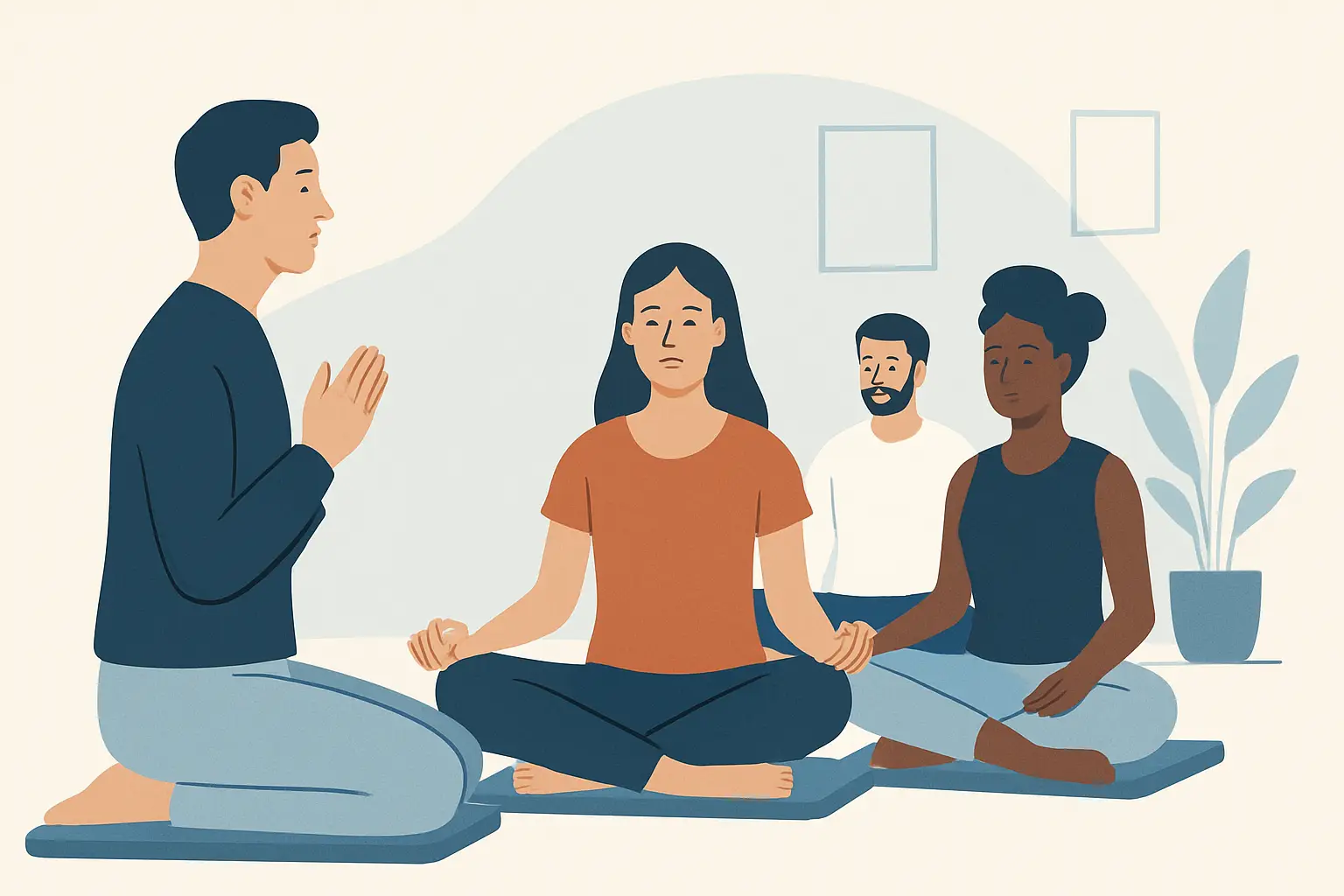
You can feel it in the room before anyone takes the first conscious breath.
A few people are excited. A few are nervous. Someone has come because they are grieving. Someone else is quietly hoping this will finally ease their anxiety. And you, as the facilitator, are standing at the threshold between “a powerful experience” and “a well-held healing container”.
That’s why breathwork session structure matters for facilitators in the UK and elsewhere. Not because we want to make something sacred feel clinical, but because structure is what allows surrender. When people sense you know where you are taking them, their nervous system softens. When they soften, the breath can do its work.
What a strong session structure really does
A solid structure does three things at once.
First, it creates psychological safety. Clear timing, clear consent, clear guidance and clear boundaries reduce uncertainty. Second, it supports physiological safety. Conscious circular breathing can shift people quickly into altered states, and your pacing, cues and checks help keep that shift within a window that is workable for the body.
Third, structure protects the integrity of integration. Most facilitators can lead a strong breathing wave. Fewer know how to land it well so clients leave more resourced, not just opened.
This is where “it depends” comes in. The structure is not a rigid script. It is a map you adapt based on group size, experience level, trauma history, and why they are there. Your job is to keep the container consistent while letting the breath express itself differently each time.
The core arc: open, breathe, integrate, close
Almost every effective breathwork session follows a simple arc, whether you are guiding 1:1, couples or a room full of your soul tribe.
You open the space and set expectations. You guide a breathing journey with a clear beginning, middle and end. You support integration while people are still tender and receptive. Then you close in a way that helps them re-enter real life with steadiness.
If you are newer to facilitating, this arc becomes your anchor. If you are experienced, it becomes your freedom. You can improvise within it because the bones of the session remain reliable.
Opening the container (10-20 minutes)
The opening is not housekeeping. It is nervous system orientation.
Start by welcoming the room in your own grounded presence. Speak slowly enough that your own breath sets the pace. Let people know exactly what will happen: how long you will talk, how long they will breathe, how music will be used if you use it, and what support looks like if emotions arise.
Consent is part of the spiritual practice here. If you offer hands-on support, explain how people can opt in and opt out without needing to justify themselves. If you do not offer touch, name that clearly too. The clearer you are, the more people can relax.
This is also where you screen in real time. You do not need to interrogate, but you do need to be responsible. Ask about pregnancy, epilepsy, uncontrolled high blood pressure, serious heart conditions, and acute psychiatric instability. Invite people to speak with you privately if anything is relevant. A gentle sentence like “Your safety matters more than intensity” sets a tone of mature facilitation.
Then give a simple intention invitation. Not a pressured one. Intention works best when it is spacious: “What are you ready to feel?” or “What would your heart like support with today?”
Finally, teach the mechanics of conscious circular breathing in plain language. Demonstrate the rhythm. Explain what might happen: tingling, temperature shifts, emotional release, unexpected memories, laughter, trembling. Normalise without dramatising.
Settling the body before intensity (3-7 minutes)
Many sessions go too fast too soon. People arrive from work, the Tube, a busy family home, their own inner noise. Ask the body to drop in before you ask it to open.
A short downshift might include a body scan, gentle movement, or slow breaths with longer exhales. The point is to create a baseline. When the baseline is established, you can actually track change.
This is also where you set the group agreements in a living way: silence during the journey, permission for sound, and a reminder that each person is responsible for their own pace. In group work, that last piece reduces the unspoken pressure to perform.
The breathing journey (25-45 minutes)
This is the heart of the session. Keep it simple: a clear on-ramp, a steady middle, and a skilful downshift.
The on-ramp (5-10 minutes)
Begin with a pace that is accessible. Cue the circular rhythm and guide people to soften the jaw, relax the belly and keep the breath connected. You are listening for the room, even in silence. Are people rushing? Holding? Trying to do it “right”?
Offer permission-based cues: “If it feels supportive, deepen the inhale,” rather than commands that override bodily wisdom. In trauma-aware work, agency is medicine.
The middle wave (15-25 minutes)
Here you hold consistency. Your voice becomes less frequent and more precise. You might cue focus points, encourage surrender, or guide people back to the breath when the mind spirals.
This is also where facilitation maturity shows. Some people will move into strong catharsis. Others will feel almost nothing. Both can be correct. If you chase peak experiences, you can push clients beyond their capacity. If you fear intensity, you can shut down the very release they came for.
A helpful approach is to track “activation” and “resource” simultaneously. If someone is highly activated, bring in grounding cues: slower rhythm, longer exhale, hand on heart, feeling the mat beneath them. If someone is dissociating or drifting, invite them to feel sensation, strengthen the inhale, or open their eyes.
In group sessions, you will not catch everything, and that is a real trade-off. That is why your structure needs built-in safety: clear self-regulation options, permission to pause, and predictable transitions.
The downshift (5-10 minutes)
Do not drop people out of intensity abruptly. Guide the breath into slower rhythm. Invite natural breathing. Include a longer exhale and moments of stillness. This is the landing that tells the nervous system, “We are safe now.”
If you use music, let the music do some of the downshift work. If you do not, your voice and pacing must do it. Silence can be powerful here, but only when it is held with confidence.
Integration: the part that makes it stick (15-30 minutes)
Integration is not chatting about what happened. It is helping the body and psyche organise what happened.
Start with stillness. Then offer grounding: feeling the room temperature, gentle movement of fingers and toes, a sip of water. If appropriate, invite journalling. Creative expression can also help, but keep it optional.
Sharing can be beautiful, and it can also become performative. Set a clear frame. Invite short shares, no fixing, no advice, and confidentiality. If someone shares something heavy, bring it back to resourcing. You can validate their courage without turning the circle into group therapy.
For 1:1 sessions, integration can include a bit more meaning-making. Ask what they noticed, what felt supportive, and what they want to take into daily life. For couples, integration is often about nervous system co-regulation: speaking from “I”, staying embodied, and offering appreciation rather than analysis.
A simple line that serves almost everyone is: “What does your system need now to feel cared for?” It moves clients from story to embodiment.
Closing the circle (5-10 minutes)
Closing is a threshold too. You are returning people to life, not just ending an event.
Name aftercare clearly: hydration, a gentle evening, no big decisions, and extra support if emotions continue to move. Let people know what is normal, and what is a sign they should seek professional support.
End with gratitude that does not feel forced. A brief blessing, a hand on heart, or a few breaths together can seal the container. Then be available. Some of the most important facilitation happens in the two minutes after the session when someone quietly asks, “Is this normal?”
Adapting breathwork session structure for facilitators across settings
The bones stay the same, but the emphasis changes.
In 1:1 work, you can personalise the pacing, track micro-shifts, and intervene sooner. The trade-off is that the client’s intensity can feel bigger because there is nowhere for it to disperse. You need strong boundaries and excellent self-regulation.
In couples work, structure must protect both people. Clear agreements around touch, eye contact, and speaking are essential. One partner’s breakthrough can trigger the other. You are facilitating two nervous systems and their relational field.
In groups, you lean more on pre-briefing, self-regulation options and clear transitions. You will also use your voice differently: less processing, more rhythm and reassurance. The trade-off is less individual attention, so your screening and opening orientation carry more weight.
The facilitator’s hidden structure: your own state
Here is the piece nobody can fake. Your inner state is part of the session architecture.
If you are rushed, the room feels it. If you are performative, people tighten. If you are grounded, people trust.
Before you facilitate, take a few minutes alone. Feel your feet. Slow your breath. Remember your role: you are not making people heal. You are holding a pathway where their own intelligence can rise.
This is one reason many facilitators choose a structured training pathway with clear methodology and safety standards. If you are called to deepen your competence and confidence in leading sessions, workshops and retreats, Nalu Breathwork offers certification rooted in heart-led facilitation and a Hawaiian-inspired method set at https://Nalubreathwork.com.
A helpful closing thought to carry into your next session is this: when your structure is strong, you do not need to push for transformation. You simply keep the door open long enough, and with enough care, for the breath to walk people home.
Frequently Asked Questions
What is the ideal structure for a breathwork session in the UK?
A strong session follows a simple arc: open the space, guide the breathing journey, support integration, then close for steady re-entry. Nalu Breathwork teaches UK facilitators this trauma-aware flow so the container stays consistent while letting the breath express itself differently every time.
Does UK breathwork training teach how to run group sessions, not just one-to-one?
Yes, group facilitation is a core part of training. Nalu Breathwork teaches UK students the full session structure, opening the space, guiding the breath, supporting integration, and closing safely, then has them practise leading a full breathwork circle so they are ready to hold group work confidently.