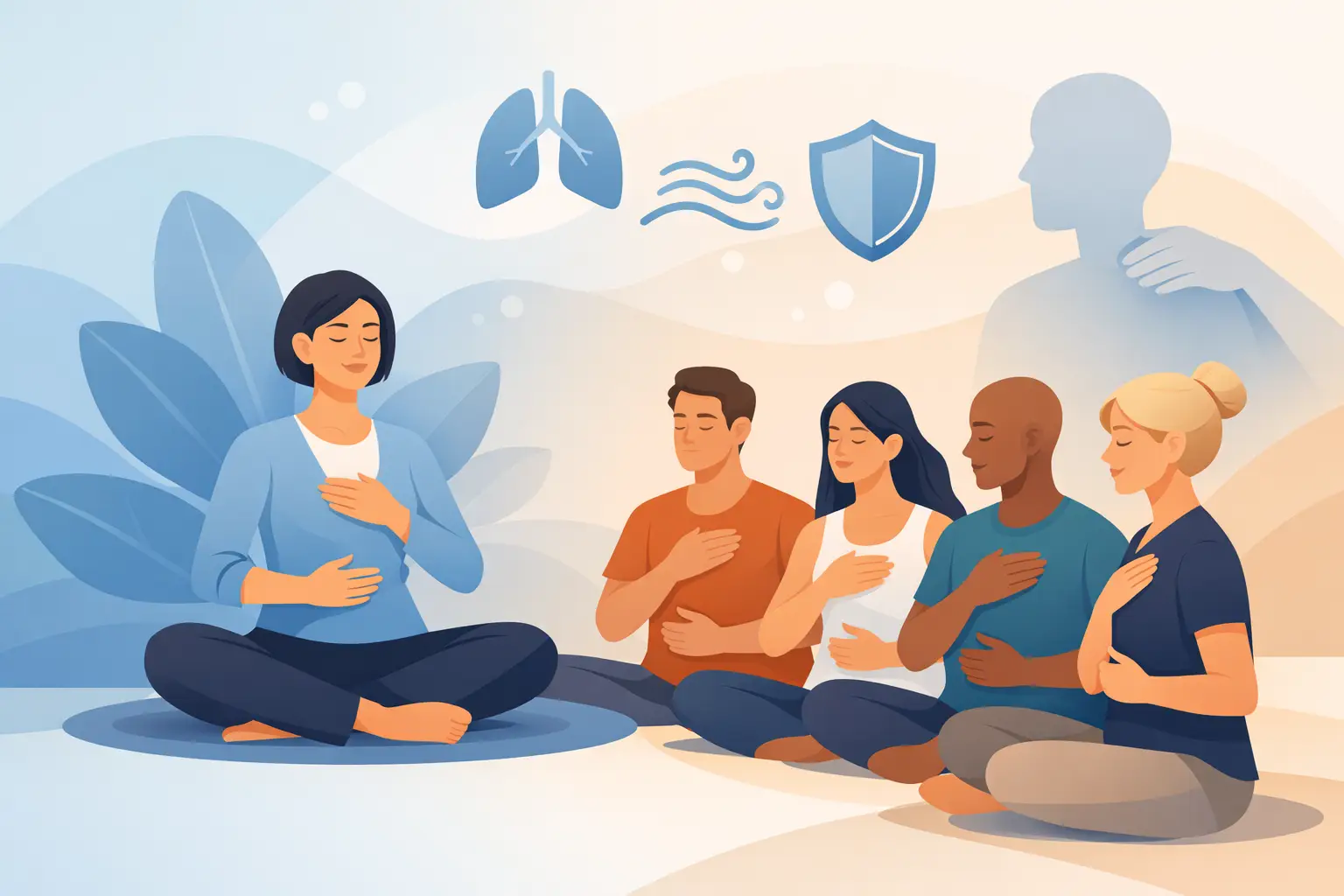
A powerful group session can open the room in minutes. Breath shifts, bodies soften, emotions rise, and what began as a circle of strangers can become a deeply connected field. That is exactly why a strong group breathwork safety guide matters. In breathwork, the beauty of transformation and the responsibility of holding it always travel together.
For facilitators, safety is not a box to tick before the music starts. It is the structure that allows people to surrender, feel, release and return with trust. If you want to lead workshops, retreats, festivals or sacred circles well, your skill is not measured only by how profound the session feels. It is measured by how carefully you prepare, how clearly you guide, and how steadily you respond when the unexpected appears.
Why a group breathwork safety guide matters
In one-to-one work, your attention can stay with a single person’s rhythm, body language and emotional process. In a group, the field is more layered. One participant may be calm and flowing, another may be dissociating quietly, and someone else may be moving into a strong cathartic release. The larger the room, the more your awareness must widen.
That does not mean group work is inherently unsafe. It means group work asks for stronger systems. The right screening, pacing, briefing and aftercare can make a group session profoundly supportive. Poor preparation, by contrast, can leave people overwhelmed, confused or physically unsettled.
The trade-off is simple. Intensity can create breakthrough, but only when it is held inside clear boundaries. Heart-centred facilitation is not about pushing people further than they are ready to go. It is about helping each person stay in meaningful contact with their own experience.
Screening before the session
A reliable group breathwork safety guide always begins before anyone enters the room. Screening is one of the clearest signs of facilitator maturity. It protects participants, and it protects the integrity of the work.
Breathwork using conscious circular breathing can influence the nervous system quickly. Because of that, you need to know whether someone has physical or psychological factors that call for modification, extra support or a referral elsewhere. This may include a history of cardiovascular conditions, epilepsy, recent surgery, pregnancy, severe mental health instability, or current use of medication that could affect regulation. The details depend on the method being taught and the intensity of the session, but the principle stays the same: never assume one format suits everyone.
In practice, this means using a clear health form, reviewing it properly, and following up where needed. A form alone is not enough if nobody reads it with care. Some people under-disclose because they are eager to join. Others simply do not realise what is relevant. Your role is to create a screening process that feels welcoming, not interrogative, while still being thorough.
Consent, expectations and informed choice
Safety deepens when participants understand what they are saying yes to. This is where many newer facilitators rush. They want to get to the experience. But informed choice is part of the experience.
Before the session, explain the breathing style, the likely physical sensations, the possibility of emotional release, and the options available if someone needs to slow down or stop. Let people know what support will and will not be offered, including whether touch is ever used and how consent for that is handled. If there will be assistants in the room, say so.
This matters spiritually as much as professionally. When people feel they have agency, the room becomes safer. They are less likely to override their own limits in the hope of a big breakthrough. You are not there to impress people with intensity. You are there to guide them into an experience they can integrate.
Setting up the room with safety in mind
A beautiful room is lovely. A safe room is essential. Ideally, participants have enough personal space to lie down, move naturally and remain undisturbed. You want clear walkways, easy access to exits, water available, and a room temperature that supports relaxation without tipping people into discomfort.
Music, lighting and numbers also matter. Loud music can be powerful, but if it drowns your voice or increases overwhelm, it stops serving the session. Dim lighting may help inward focus, yet you still need to be able to observe participants. And group size should match your capacity, not your ambition. If the room is too large for one facilitator, bring trained support.
That point is worth sitting with. A bigger group may increase income, but it also increases responsibility. There is no shame in leading smaller circles while your competency deepens.
Pacing the breath and the emotional field
One of the most important safety skills in group facilitation is pacing. A room can build energy quickly, especially when participants begin synchronising unconsciously with the group. If your cues are too forceful, too fast or too relentless, you can push people beyond a useful edge.
Good pacing invites rather than drives. It offers a clear rhythm, then keeps checking the room. Are people becoming more embodied, or more scattered? Are they breathing fully, or straining? Is the field opening, or tipping into overload?
This is where facilitator presence matters more than performance. A calm, grounded tone helps regulate the group. So does reminding participants that they can soften, pause, return to a gentler breath or place a hand on the heart. Permission is regulating. People often need to hear that they can choose.
Contraindications and modifications in group settings
Not every participant should practise the same way. In a group, that means building modifications into your teaching from the start rather than treating them as exceptions.
Some participants may need to keep a softer breath, remain seated, or opt for a shorter active period. Others may be better served by a different practice entirely on that day. This can feel awkward if your marketing promises a dramatic emotional release, but ethical facilitation is not built on promising the same outcome for all. It is built on meeting the person in front of you.
For wellness professionals adding breathwork to their toolkit, this is a key professional threshold. Knowing the method is one thing. Knowing when to adapt it is what makes you safe to hire, trust and recommend.
What to watch for during the session
In group work, safety depends on observation. You are listening with your eyes as much as your ears. Shallow panic breathing, frozen stillness, signs of dissociation, escalating agitation, severe cramping, confusion or an inability to respond to simple prompts all require attention.
Sometimes the safest intervention is gentle and minimal: lowering your voice, cueing a slower exhale, inviting eye opening, or asking someone to feel the ground beneath them. Sometimes a participant needs one-to-one support outside the main group field. If you work with assistants, they should know exactly how to respond and when to involve you.
Not every intense moment is harmful. Tears, sound, trembling and strong emotion can all be part of a healthy release. The question is whether the person remains connected enough to process what is happening. Intensity without connection can become destabilising.
Aftercare is part of the session
A session does not end when the music stops. Integration is part of your safety framework. Participants often need time to settle, hydrate, orient and make sense of what moved through them.
Give simple grounding guidance before anyone rushes back to their mobile phone or car. Encourage rest, reflection and gentle self-care. If someone has had a particularly strong experience, check in privately and make sure they leave resourced. In some cases, follow-up contact is wise.
This is also where your scope of practice matters. Breathwork can be deeply therapeutic, but facilitators are not automatically qualified to treat mental health conditions. Know when to refer, when to suggest extra support, and when an experience needs more than spiritual language. Compassion and clarity belong together.
Safe group facilitation is a teachable skill
Many gifted space holders are warm, intuitive and deeply compassionate. Those qualities matter. But in group breathwork, intuition needs training around it. Real confidence comes from understanding contraindications, nervous system responses, consent, group dynamics and professional boundaries.
That is why facilitator education should include more than the breath pattern itself. A strong training asks not only how to lead a moving session, but how to hold a room where different histories, bodies and emotional capacities are present at once. For those called to lead this work professionally, that standard matters. It supports better client outcomes and a more sustainable practice.
At Nalu Breathwork, this heart-led approach sits alongside the practical reality of facilitation: learning to guide groups with care, competence and reverence for the process. Transformation is powerful, but safety is what allows it to land.
If you feel called to hold groups, let your first promise to your soul tribe be this: nobody in your room should ever have to trade safety for depth. The most trusted facilitators know that the breath can open extraordinary doors, but it is wise, loving structure that helps people walk through them well.