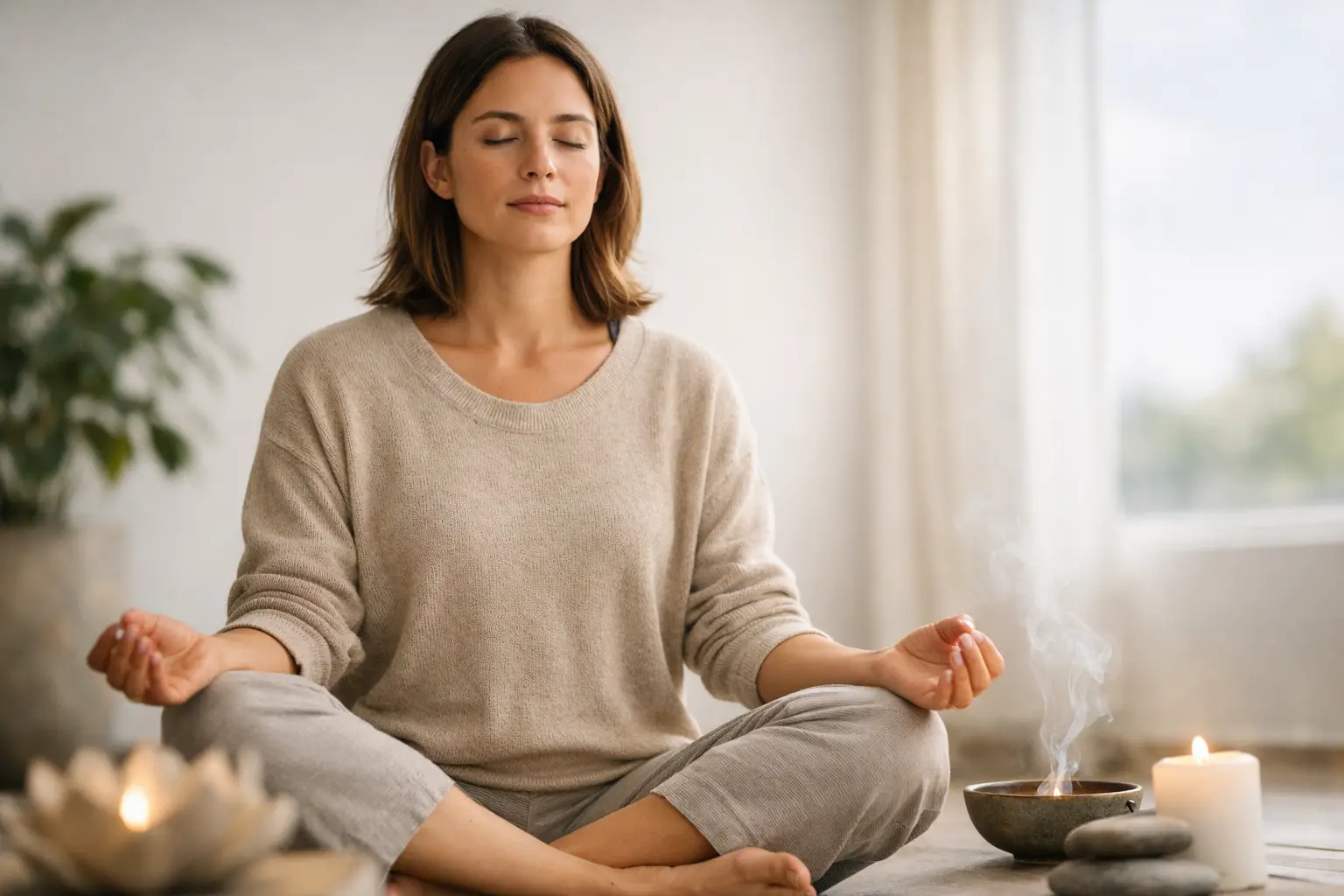
Some days, emotional regulation does not look like perfect calm. It looks like catching yourself before you snap, noticing the tightness in your chest, and choosing one conscious breath before old patterns take over. For many wellness professionals and space-holders, breathwork for emotional regulation skills is not a nice extra. It is part of how you stay resourced, present and able to support others without abandoning yourself.
That matters because emotions do not live only in the mind. Stress can shorten the breath, grief can make the chest feel heavy, anger can heat the body, and anxiety can pull attention into the future. When breathing changes, the nervous system often follows. When breathing becomes more intentional, the body can begin to feel safer, steadier and more available for healthy response rather than reaction.
Why breath shapes emotional regulation
Emotional regulation is not about suppressing what you feel. It is the capacity to stay in relationship with an emotion without becoming completely overwhelmed by it. That might mean feeling sadness without shutting down, holding frustration without lashing out, or moving through fear without freezing.
The breath is one of the few bridges between the body and the conscious mind. You cannot always think your way out of activation, but you can often influence your state through the rhythm, depth and pace of breathing. Slow, grounded breathing can support down-regulation when the body is on high alert. More energising patterns can help when someone feels flat, numb or collapsed. The skill lies in knowing what state you are in and choosing the right approach for that moment.
This is where nuance matters. Not every breath practice is regulating for every person. Someone carrying trauma may find certain faster techniques too intense without proper preparation and support. Someone in acute anxiety may need shorter, simpler cues rather than a layered process. Emotional regulation is not one-size-fits-all, and responsible breathwork honours that.
Breathwork for emotional regulation skills in real life
If you work in healing, coaching or wellbeing, you have likely seen how quickly an emotional state can shift a session. A client arrives scattered, shut down, tearful or irritable. You may recognise those same states in yourself on a busy week, before a workshop, or after holding space for others.
Breathwork for emotional regulation skills gives you something practical and embodied. Instead of asking the body to calm down on command, you offer it a pathway. A few minutes of intentional breathing can create enough internal space to choose a wiser response. That pause is often where healing begins.
In daily life, this might look simple. Before a difficult conversation, you breathe slowly into the belly and lengthen the exhale. After receiving upsetting news, you place a hand on the heart and allow the breath to soften the body instead of bracing against the feeling. When you notice yourself dissociating or drifting away, you use a fuller, more connected breath to return to presence.
These are not dramatic fixes. They are repeatable practices that build capacity over time.
What breathwork can support, and where its limits are
Breathwork can help with emotional awareness, nervous system regulation, stress recovery and the safe release of held tension. Many people experience more clarity, less reactivity and a stronger sense of inner steadiness when they practise consistently. It can also increase body awareness, which is essential if someone tends to intellectualise feelings or override their needs.
At the same time, breathwork is not a substitute for every kind of support. If someone is navigating significant trauma, severe anxiety, depression or complex mental health needs, breathwork may be most effective alongside therapy or clinical care. There is wisdom in knowing when to use a gentle regulating practice and when deeper support is needed.
For practitioners, this is part of ethical facilitation. A heart-led approach does not mean pushing for catharsis. It means meeting the person in front of you, reading the nervous system and choosing the level of intensity with care.
How to build emotional regulation through breath
The first step is not technique. It is awareness. Before changing the breath, notice what is already happening. Is the breath shallow, held, rushed or uneven? Is the jaw tight? Is the chest collapsed? This simple noticing begins to interrupt autopilot.
From there, start with stability. For many people, regulation begins with breathing that feels safe and manageable. A softer inhale through the nose and a slightly longer exhale can signal the body to settle. You are not forcing peace. You are inviting it.
Consistency matters more than intensity. A short daily practice often supports emotional regulation more effectively than occasional deep sessions. When the body learns that breath is a reliable place to return to, resilience grows. Over time, you may notice that your threshold for stress increases, your reactions slow down, and emotions move through with less fear.
For those who hold space professionally, this foundation changes everything. Your presence becomes less performative and more anchored. Clients feel when a facilitator is genuinely regulated, not simply using polished language.
Different breath styles for different emotional states
There is no single best breath pattern for every moment. A calming breath may help when someone feels anxious, overstimulated or angry. A more open, heart-centred breath may support emotional release when grief or sadness feels stuck. A connected circular breath, used skillfully and in the right setting, can help access and move deeper emotional material that talking alone may not reach.
This is one reason quality training matters. Methods such as Ha Breath, Wave Breath and Healing Heart Breath each create a different internal experience. The art is not just learning the pattern. It is understanding when to use it, how to introduce it, and how to support what emerges.
For example, if a client is barely tolerating sensation in the body, a powerful activating pattern may be too much too soon. If someone is emotionally flat and disconnected, only using sedating breath may reinforce that shutdown. Emotional regulation is not always about calming down. Sometimes it is about gently waking up enough to feel again.
Why practitioners need these skills first-hand
If you want to guide others into emotional depth, you need lived experience of your own breath. Not perfection. Not constant serenity. But a genuine relationship with your own nervous system, your own triggers and your own patterns of protection.
This first-hand work builds discernment. You learn the difference between a meaningful emotional release and an overwhelmed state that needs slowing down. You become more sensitive to pacing, consent and the subtle cues of safety. You stop chasing breakthrough moments and start valuing integration.
That is especially important for yoga teachers, coaches, therapists, bodyworkers and retreat leaders who want to bring breathwork into their existing practice. Breath is powerful. Used well, it can deepen transformation. Used without enough grounding or skill, it can create more activation than a client can integrate.
A structured training pathway helps bridge that gap. It gives you more than inspiration. It gives you method, safety principles and the confidence to lead 1:1, couples and group experiences with care.
Breathwork for emotional regulation skills as professional practice
For purpose-led practitioners, this work often begins as personal healing and then grows into service. You feel what breath can shift inside you, and naturally want to share it. The next question becomes whether you can hold that space safely, clearly and professionally.
That is where standards matter. If you plan to offer paid sessions, workshops or retreats, emotional regulation is not only something you teach clients. It is a core facilitator competency. You need to know how to track the room, respond to different emotional states, and create a container that supports expression without losing structure.
This is why many in our soul tribe seek training that combines heart-based depth with practical readiness. A modality can be spiritual and still require professional skill. In fact, the more emotionally potent the work, the more important that skill becomes.
Nalu Breathwork speaks to this beautifully by pairing transformational breath practices with facilitator education rooted in safety, presence and real-world application. For many practitioners, that blend is what turns passion into a grounded vocation.
A simple place to begin
If you are new to this, begin gently. Sit with both feet on the floor or lie down somewhere quiet. Place one hand on the belly and one on the heart. Inhale softly through the nose for a count that feels natural, then exhale a little longer than you inhale. Stay for three to five minutes and notice what changes.
Do not chase a special state. The practice is to become intimate with what is here. Some days the breath will soothe you quickly. Other days it may reveal emotions you have been avoiding. Both are useful. Both are part of building capacity.
Over time, breathwork becomes less about controlling feelings and more about trusting that you can meet them. That trust changes how you lead, how you love, and how you return to yourself when life asks more of you than expected.
The most powerful emotional regulation skill may not be staying calm at all costs. It may be knowing that when the wave rises, your breath can help you stay with your heart.