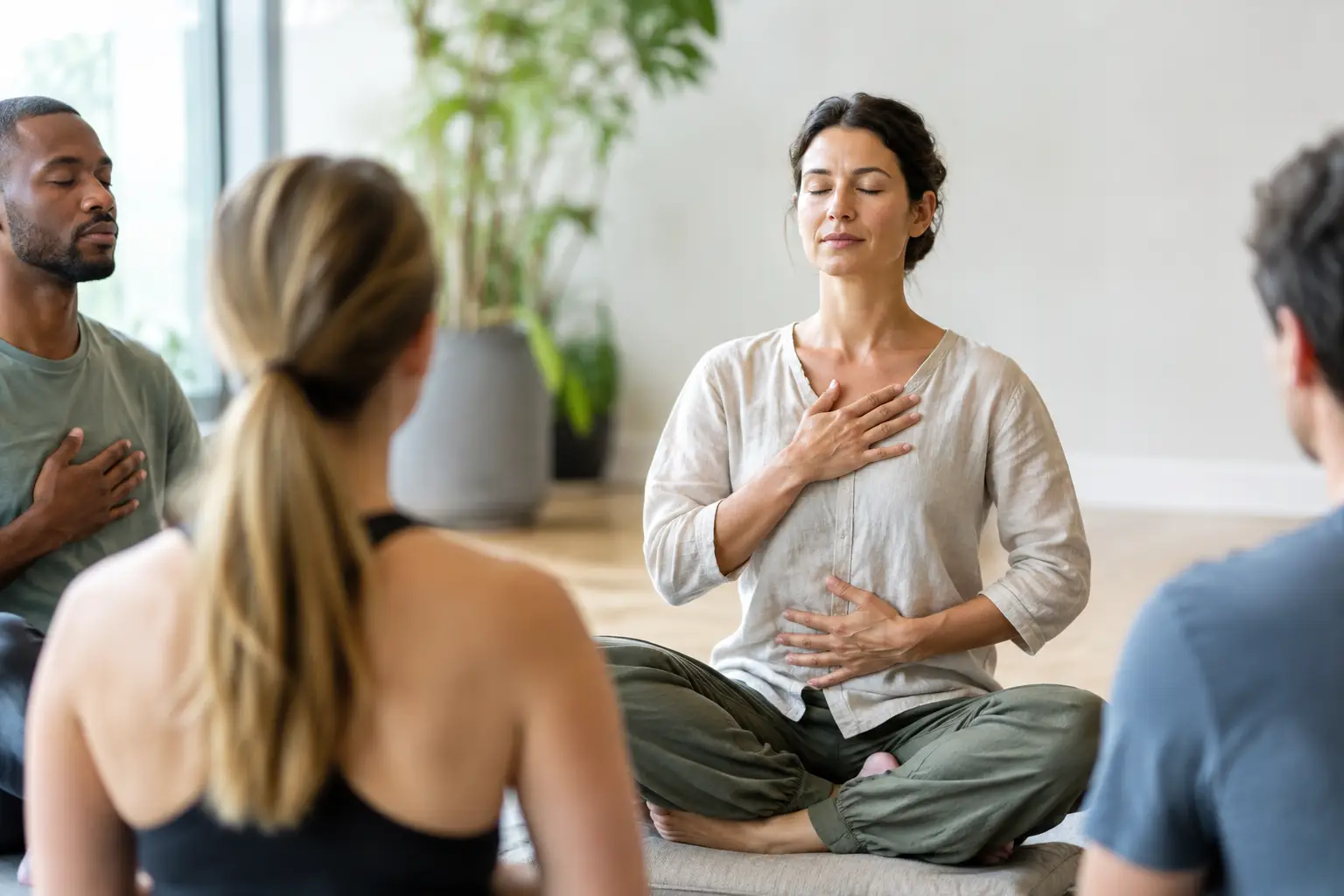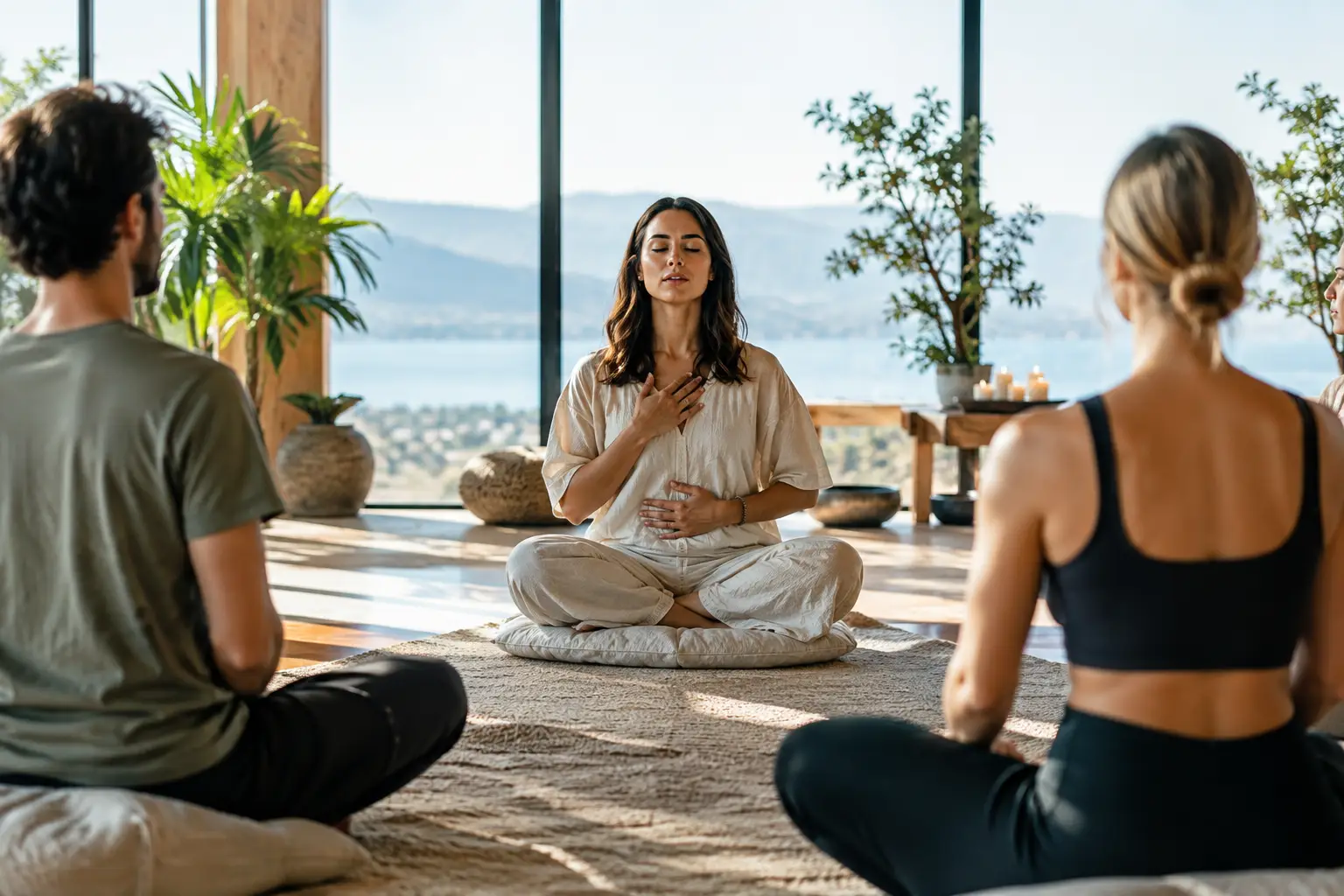
A beautiful group session can lose its depth quickly when the room is too cold, the walls are thin, or participants are worried about being overheard. Your venue is not simply a backdrop. It becomes part of the nervous-system experience you are creating. This group breathwork venue guide is for facilitators who want to hold grounded, heart-led spaces where people can soften, breathe deeply and feel genuinely supported.
Whether you are preparing for your first paid circle or planning a retreat for your growing soul tribe, the right setting helps you lead with confidence. It also protects the practical foundations of your work: comfort, privacy, safety and clear boundaries.
Start with the feeling you are here to create
Before comparing hire fees or checking availability, return to the intention of your session. A conscious circular breathing journey may bring emotion, movement, sound and profound stillness to the surface. Participants need to feel that there is permission to be real, not that they must stay small to fit the room.
Look for a venue with a calm, welcoming energy. Natural light can be lovely for arrival, while blinds or curtains are useful if you need to dim the space for the active breathwork journey. Cleanliness matters more than luxury. A simple studio with warm floors, soft lighting and enough room to lie down comfortably will usually serve your group better than an impressive room that feels clinical or exposed.
Ask yourself a practical question as well: can you arrive early enough to prepare the room without rushing? Creating a sacred circle is often found in the details – laying out mats, setting up music, checking the temperature and taking a few breaths before your first guest arrives.
Group breathwork venue guide: space, layout and flow
A room can look spacious when it is empty, then feel surprisingly tight once mats, blankets, bolsters and bodies are on the floor. Plan for each participant to have enough personal space to breathe, stretch their arms and move gently without touching another person. As a guide, allow generous room for yourself to move around the group and offer support where appropriate.
For a small circle of eight to twelve people, an uncluttered yoga studio or wellbeing room is often ideal. Larger groups require more than extra square metres. You need clear sightlines, reliable audio, accessible exits and enough space for participants to sit up or step outside quietly if they need a pause.
Think through the journey from arrival to closing. Is there a private or separate area where people can complete forms, use the loo or take a moment before they enter the main space? Is there somewhere to gather after the session with water and a cup of tea? Integration is part of the experience, and a rushed exit into a busy corridor can feel jarring after deep inner work.
Flooring deserves special attention. Carpet, timber, sprung floors and clean studio mats can all work well with proper padding. Cold tiles or hard concrete may still be possible, but you will need to provide or ask participants to bring extra layers, yoga mats and blankets. Never assume that people will be comfortable lying still for an hour simply because the room looks lovely online.
Protect privacy, sound and emotional expression
Breathwork can be quiet, but it is not always silent. Participants may sigh, cry, laugh, hum or make sounds as their bodies release held emotion. A venue beneath a noisy gym, beside a café or separated from a public waiting room by a thin partition can make people self-conscious.
Ask the venue manager what happens in neighbouring rooms during your booking. Find out whether music is permitted, whether doors can be closed, and whether there are quiet-hour restrictions. Test the sound system yourself if possible. Bluetooth speakers can be useful, yet they are not always dependable in larger venues, and music that cuts out midway through a journey can disrupt the group.
Privacy also includes who can enter. Confirm that no cleaners, staff members or other hirers will walk through the room. If the venue has glass doors or street-facing windows, check whether curtains, frosting or screens are available. Participants do not need total isolation from the world, but they do need confidence that their vulnerability will be respected.
Make safety visible before anyone starts breathing
A heart-centred space is not created by candles alone. It is created through thoughtful leadership. Choose a venue that supports your safety processes rather than working against them.
At a minimum, you need easy access to toilets, drinking water, fresh air and an exit route. Check mobile reception, especially at rural retreat venues, and know the exact address in case emergency services are ever required. Keep a first-aid kit close by and understand the venue’s emergency procedures before the group arrives.
Your participant screening, informed consent and scope of practice sit alongside the venue choice. Some people may need medical guidance before joining an intensive breathwork session, or may be better served by a gentler approach. Be clear about what your session offers and what it does not replace. A suitable room cannot compensate for inadequate preparation, but it can make it easier for you to respond calmly and responsibly when someone needs support.
If you are hiring a venue, ask about public liability requirements and whether the owner needs to be named on your insurance documentation. Requirements vary between venues and insurers, so clarify this in writing rather than relying on a casual conversation.
Choose comfort over performance
It is tempting to book the most photogenic venue you can afford. Yet a space designed for events may have harsh overhead lighting, nowhere to store shoes and coats, poor ventilation or chairs that cannot be moved. Your participants will remember how held they felt, not how fashionable the entrance looked.
Temperature is one of the biggest overlooked factors. During breathwork, some people feel warm while others become cold and want additional layers. Ideally, you can control the heating, open a window if needed and make adjustments without leaving the group. Let participants know beforehand what to bring: comfortable clothing, a water bottle, a yoga mat, blanket and anything else your particular session requires.
Accessibility is equally meaningful. Consider step-free entry, accessible toilets, nearby parking or public transport, and whether the venue welcomes people with varied mobility needs. You may not be able to meet every requirement in every hired space, especially when starting out, but asking these questions is an expression of care.
Build a relationship with your venue host
The best venue arrangements become partnerships. When the manager understands that you are holding a wellbeing practice with a clear arrival time, a focused session and quiet integration afterwards, they can help protect the atmosphere.
Be transparent about group size, music, floor-based practice and your set-up time. Leave the room cleaner than you found it, keep communication warm and pay promptly. In return, you may gain a reliable home for regular circles, more flexibility around bookings and recommendations from a host who trusts your work.
Before committing to a recurring date, run a small pilot session. Notice the practical realities: the traffic noise at the time you meet, how long the room takes to warm up, whether the loo is easy to find, and how participants respond to the space. Their feedback can reveal what your facilitator eyes missed.
Let the room support your confidence as a facilitator
As you grow from intimate one-to-one work into workshops, retreats and community circles, venue selection becomes a core professional skill. You are learning to hold more than a breathing technique. You are holding an experience from the first welcome to the final grounded goodbye.
At Nalu Breathwork®, we believe skilled facilitation joins emotional depth with clear, practical care. A carefully chosen room gives your training, your preparation and your heart-led presence somewhere to land.
Choose a venue that lets your participants exhale before the session has even begun. When the space feels safe enough for honesty, your circle has room for the peace, release and connection it came to find.