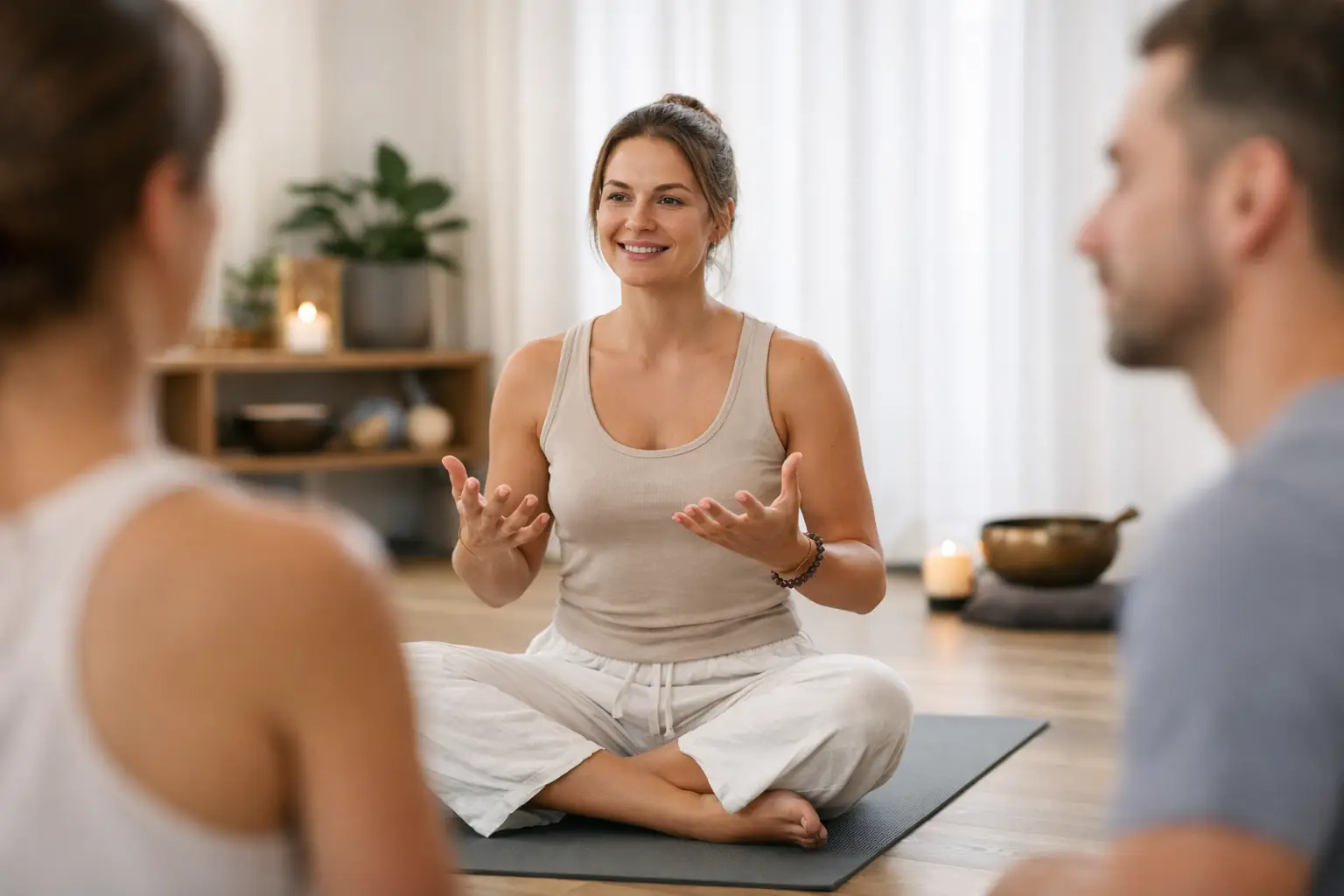
Some people arrive at breathwork after years in wellness. Others find it after burnout, grief, or a season of life that cracked the heart open and asked for a new path. If you are wondering who can become a breathwork instructor, the honest answer is wider than most people expect – but it also comes with real responsibility.
Breathwork is not simply about loving deep conversations, holding space, or having had your own powerful session. It is a professional practice that asks for presence, maturity, safety awareness, and the willingness to keep learning. The beautiful part is that you do not need to fit one narrow mould to begin.
Who can become a breathwork instructor in practice?
A breathwork instructor can come from many walks of life. Yoga teachers often feel drawn to it because they already understand the body-breath connection. Coaches may love how quickly breath can help clients move from thinking into feeling. Massage therapists, energy workers, retreat hosts, and holistic practitioners often add breathwork because it creates a deeper layer of emotional release and integration.
Then there are the people with no formal wellness background at all. They may have experienced profound healing through breathwork and feel called to share it in a grounded, ethical way. That call matters. But calling alone is not enough. Good training matters because inspiration needs structure if it is going to become safe facilitation.
So, who can become a breathwork instructor? Adults with the right guidance, the willingness to practise, and the humility to respect the depth of the work. You do not need to be a therapist to train in breathwork. You do not need to be a yoga teacher. You do not need to have a huge online following or years of spiritual language behind you. What you do need is the capacity to learn how to hold people carefully as they move through physical sensation, emotion, memory, stress, and release.
The backgrounds that often translate well
Some professional backgrounds do give you a natural head start. If you already work with people in a healing, educational, or supportive setting, breathwork may fit beautifully into your toolkit.
Yoga teachers tend to feel at home with breath-led practices, though facilitating transformational breathwork requires more than teaching pranayama in a class. Coaches may be skilled at asking questions and creating change, yet they still need to learn how to work with the body rather than staying only in conversation. Psychotherapists and counsellors often understand trauma and emotional process well, but they may need breath-specific facilitation skills and a stronger grasp of somatic pacing in altered states.
Bodyworkers, massage therapists, and energy healers often bring intuitive touch awareness and nervous system sensitivity. Retreat leaders and spiritually minded entrepreneurs may already know how to gather a group and create a meaningful experience. In each case, existing strengths help – but none of them replace specialist training.
That is one of the most important truths in this field. A caring personality is valuable. Professional competence is essential.
What matters more than your CV
The people who tend to become strong instructors are not always the ones with the longest list of qualifications. Often, they are the ones who are teachable, self-aware, and committed to doing their own inner work.
Breathwork can bring up joy, grief, insight, resistance, trembling, memories, stillness, and everything in between. If you want to guide others, you need to be willing to meet yourself too. That does not mean you must be fully healed – no one is. It means you are honest about your edges and serious about your development.
A good instructor also knows how to stay steady when someone else is moving through intensity. That steadiness is not coldness. It is heart-led presence with clear boundaries. The best facilitators are compassionate without becoming rescuers. They are intuitive, but they do not make everything up on instinct. They follow a method, understand contraindications, and know when to slow things down.
Can beginners become breathwork instructors?
Yes, beginners can become breathwork instructors, provided they enter proper training and understand the difference between experiencing breathwork and leading it. Plenty of people begin because breathwork changed their own life and they want to serve others through that transformation.
That personal experience is powerful. It gives your facilitation authenticity. Yet there is a trade-off. If you are completely new to holding space, you may need more practice in communication, group leadership, client care, and session structure than someone already working with people one-to-one.
This is why a quality certification matters so much. The right training does not just teach a breathing pattern. It teaches you how to guide safely, how to read the room, how to support emotional release, and how to structure sessions for individuals, couples, and groups. It also helps you understand the practical side of becoming a professional, from confidence and ethics to insurance readiness.
Who should pause before becoming a breathwork instructor?
Not everyone needs to teach straight away. Sometimes the wisest next step is to keep receiving the work before stepping into leadership.
If you are in the middle of an acute personal crisis, it may be kinder to let breathwork support your own healing first. If you are mainly drawn to the title rather than the responsibility, that is worth noticing. If you struggle to stay regulated around strong emotions, or tend to over-identify with other people’s pain, more personal groundwork may be needed before training to facilitate.
This is not gatekeeping. It is respect for the work. Breathwork can be deeply transformational, and that is precisely why it should be held with care.
The role of training in becoming ready
The question is not only who can become a breathwork instructor, but who can become a safe and effective one. That is where training changes everything.
A strong programme helps you build both the inner and outer skills of facilitation. You learn the method itself, the rhythm of the breath, the arc of a session, and the subtle art of language. You also learn about contraindications, emotional safety, integration, and how to respond when someone has a powerful experience.
In a structured certification, you should expect practice, feedback, and clear frameworks. You should come away able to lead more than an inspiring journey. You should be able to hold one-to-one sessions, support couples, and guide groups with confidence. For many aspiring facilitators, that practical outcome is key. They do not simply want a spiritual experience. They want a real pathway to serve their community and build meaningful work.
This is where a heart-centred school with professional standards can make such a difference. Nalu Breathwork, for example, trains facilitators in conscious circular breathing alongside Hawaiian-inspired methods such as Ha Breath, Wave Breath, and Healing Heart Breath, with a strong emphasis on safety, emotional depth, and readiness to work professionally.
Is breathwork right for your purpose-led career?
If you already support others, breathwork can become a natural extension of your work. It can deepen client transformation and help people shift what talking alone does not always reach. For coaches, therapists-in-training, yoga teachers, and retreat leaders, it may become the missing bridge between insight and embodied release.
If you are changing careers, breathwork can also be a beautiful place to begin. But it helps to be realistic. Building a practice takes more than certification. You will still need to develop confidence, experience, and a way of inviting people into the work. The good news is that breathwork is highly experiential. When facilitated well, people often feel the value of it directly.
That said, this path is not about chasing quick income or performing spirituality. The most sustainable instructors are usually those who care deeply about service, stay committed to standards, and keep refining their craft.
A better question than who can become a breathwork instructor
Sometimes the deeper question is not whether you can become a breathwork instructor, but how you want to serve. Do you want to hold intimate one-to-one sessions? Lead couples through reconnection? Create circles, workshops, retreats, or festival spaces where people can breathe, release, and remember themselves?
Your answer shapes the kind of training you need. Some people want a gentle addition to an existing practice. Others feel called to build an entire vocation around breath. Neither is more valid. What matters is choosing a training path that matches the depth of your intention.
If you feel the nudge, trust that. Breathwork tends to call people who are ready to grow as much as they are ready to guide. You do not need to have it all figured out before you begin. You simply need an open heart, a grounded teacher, and the courage to take this work seriously enough for it to change you first.