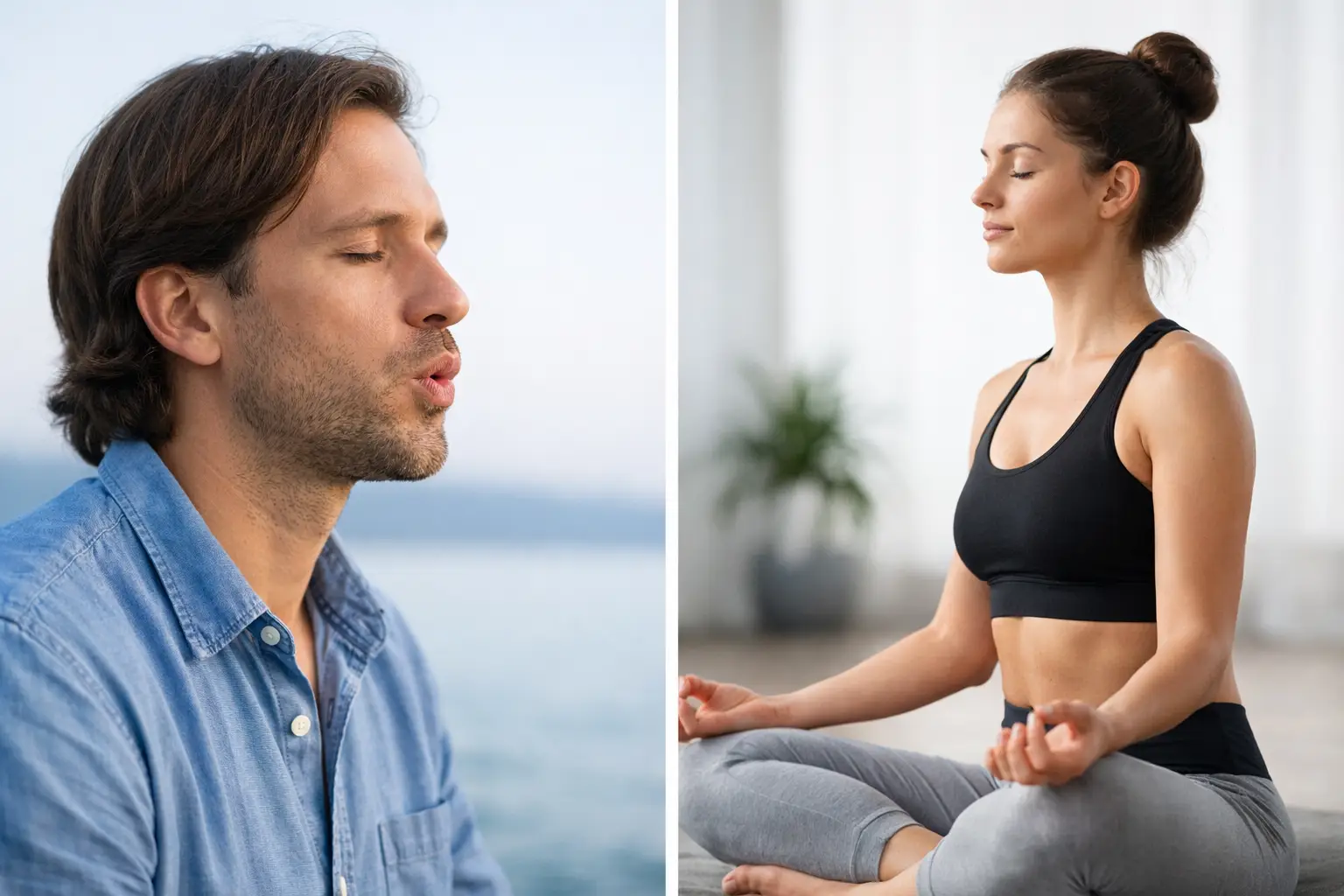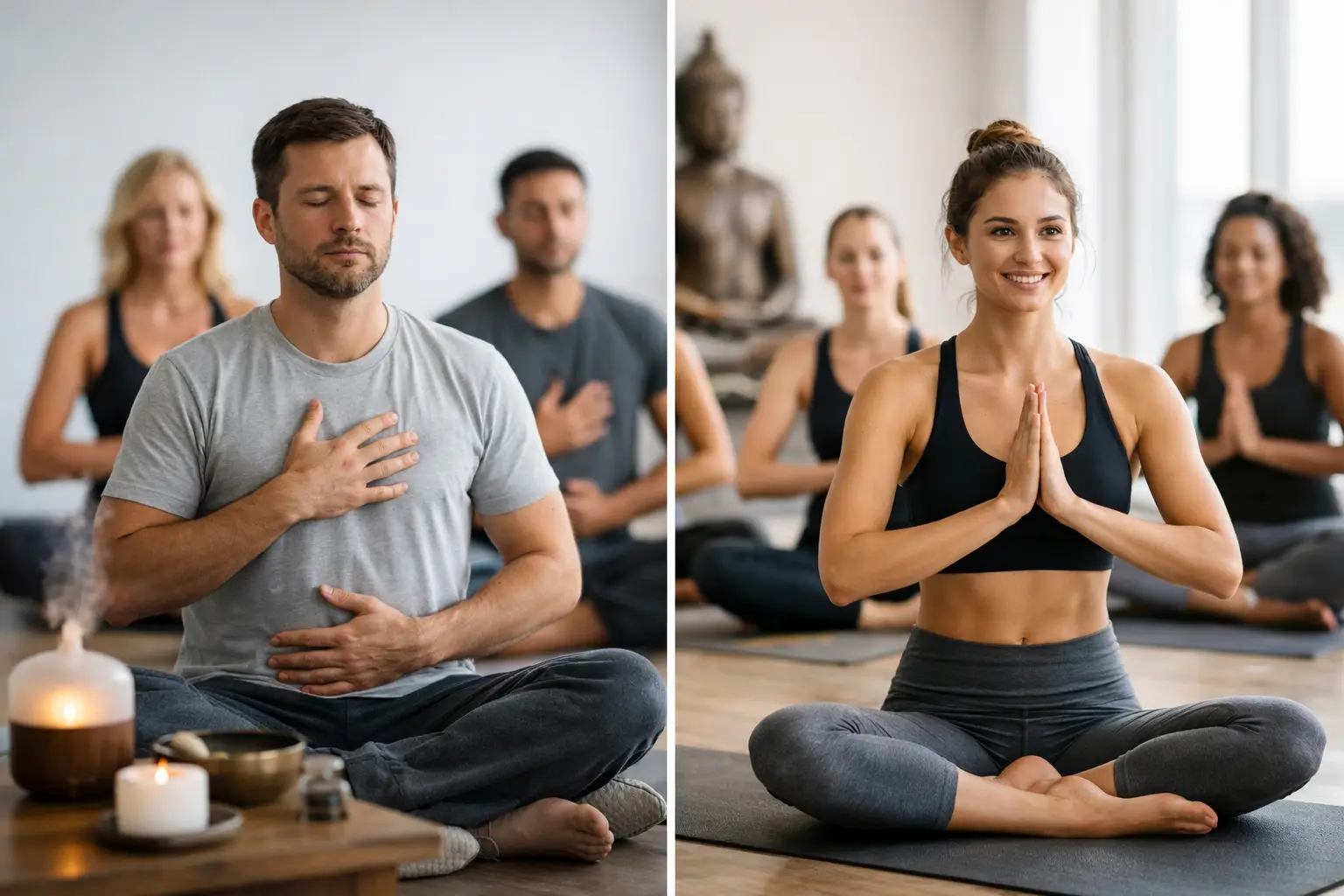
If you have ever found yourself torn between breathwork training versus yoga teacher training, you are not choosing between two interchangeable wellness courses. You are choosing the kind of space you want to hold, the kind of transformation you want to guide, and the way you want to serve your soul tribe in real, practical terms.
For some, yoga teacher training is the natural first step. It offers structure, philosophy, movement, and a recognised pathway into classes and studio work. For others, breathwork training speaks more directly to the heart – especially when the calling is less about teaching postures and more about helping people release grief, move stress through the body, and reconnect with themselves in a deeply felt way.
Neither path is better in every situation. But they are different, and that difference matters.
Breathwork training versus yoga teacher training: what sets them apart?
At a glance, both trainings sit within the wider wellbeing world. Both can support healing, embodiment, nervous system regulation, and personal growth. Both may attract coaches, therapists, retreat leaders, bodyworkers, and those who know they are here to guide meaningful transformation.
The core difference lies in the primary tool.
Yoga teacher training usually centres on movement, alignment, sequencing, philosophy, anatomy, and class leadership. Breathwork training centres on breath as the main vehicle for healing, emotional release, awareness, and altered inner states. In yoga, breath supports the practice. In breathwork, breath is the practice.
That distinction changes everything from the client experience to the skills you need as a facilitator.
A yoga teacher may guide a room through standing sequences, seated postures, breath cues, and rest. A trained breathwork facilitator may hold a one-to-one session where a client meets unprocessed emotion, shifts long-held stress patterns, or experiences a profound opening through conscious breathing. The work can be subtle, but it can also be powerful and deeply cathartic.
If your heart is calling you towards emotional healing work, the breath may feel more direct.
What you actually learn in each path
A good yoga teacher training gives you foundations in teaching methodology. You learn how to cue clearly, demonstrate safely, build a balanced class, understand common injuries, and guide students through physical practice. There is often philosophy too – ethics, history, meditation, pranayama, and the wider roots of yoga.
That breadth is one of yoga training’s strengths. It can shape you personally while giving you a clear framework for teaching general classes.
A strong breathwork training, by contrast, should go beyond simply teaching breathing techniques. It should prepare you to hold emotional process safely, understand contraindications, read the room, support individuals and groups, and facilitate with grounded confidence. If the training is designed well, you also learn how to lead different formats such as one-to-one sessions, couples work, workshops, sacred circles, retreats, and group journeys.
This is where many people are surprised. Breathwork is not just a nice add-on at the end of a yoga class. In the right hands, it is a complete modality in its own right.
For practitioners who want a method they can build a business around, that can be a major deciding factor.
Who tends to thrive in breathwork training?
People often feel drawn to breathwork training when they want to work more directly with emotion, trauma, grief, stress, and inner transformation. That does not mean breathwork replaces psychotherapy or clinical care. It does mean it can offer a powerful complementary healing space when taught responsibly.
Yoga teachers often come into breathwork because they realise that what moves people most is not always the perfect sequence. It is the moment someone finally feels safe enough to soften, breathe, and let go. Coaches and therapists-in-training are also drawn to it because breath can help clients access what talking alone cannot always reach.
If you are less interested in correcting Warrior Two and more interested in helping someone return to peace, joy, and self-trust, breathwork may feel like home.
That said, not everyone wants to hold intense emotional spaces. Some people love the artistry of movement teaching, the rhythm of weekly classes, and the discipline of embodied practice. For them, yoga teacher training may be the more aligned first step.
Career path and earning potential
This is where the choice becomes very practical.
Yoga teacher training can open the door to teaching studio classes, gym sessions, private lessons, retreats, and online offerings. But it is also a crowded field. New teachers often find themselves piecing together work across several venues, with limited pay per class and not much control over their schedule.
That does not mean yoga teaching cannot become a beautiful career. It can. But it often takes time, a loyal student base, and additional offerings such as workshops, teacher trainings, or retreats to create a strong income.
Breathwork training can offer a different route. Because the modality is often delivered in one-to-one sessions, couples sessions, group journeys, workshops, and retreat spaces, facilitators may have more flexibility in how they package their work. There can also be a clearer path towards premium experiences because clients often seek breathwork for a specific outcome – emotional release, nervous system support, life transition, burnout recovery, or spiritual reconnection.
For purpose-led practitioners, that combination matters. You want a modality that is meaningful, but you also need one that can support paid work in the real world.
A well-structured certification can make a real difference here, especially if it prepares you for professional practice, supports insurance eligibility, and teaches you how to facilitate safely across different settings.
Safety is not optional
One of the biggest mistakes people make when comparing breathwork training versus yoga teacher training is assuming breathwork is simpler because there are fewer postures to learn. In truth, guiding breath safely requires maturity, skill, and strong space-holding.
With yoga, safety often focuses on physical alignment, injury prevention, and adapting postures. With breathwork, safety can include emotional activation, trauma sensitivity, pacing, client screening, touch boundaries, contraindications, and knowing when not to push for breakthrough.
That is why choosing the right breathwork school matters so much. A heart-led approach must still be structured. Spiritual language is not a substitute for facilitator competence.
The strongest trainings blend depth with professionalism. They honour the sacred while teaching clear methods, ethical practice, and grounded leadership. If a course only promises transformation but says very little about safety, scope, or professional readiness, pause.
Is one path more respected than the other?
Yoga teacher training is more widely recognised by the general public. Most people know what a yoga teacher does. Breathwork facilitation still feels newer in some circles, even though breath-based healing practices have ancient roots.
But recognition is changing fast. More clients are actively seeking breathwork because they want something experiential, body-based, and emotionally honest. They are not just looking for fitness. They are looking for release, clarity, and reconnection.
For that reason, breathwork can feel especially relevant right now. It meets a growing need.
Still, recognition alone should not decide your path. The better question is whether the training gives you the credibility and confidence to stand behind your work. A respected breathwork certification with a clear method, lineage, and practical facilitator outcomes may serve you better than a generic yoga course you never fully use.
Can breathwork training complement yoga teacher training?
Absolutely. In fact, this is often where the magic happens.
Yoga teachers who add breathwork to their toolkit often find their work deepens dramatically. Their classes become less performative and more transformative. Their retreats gain another layer. Their students feel held not just physically, but emotionally and energetically too.
Likewise, breathwork facilitators with a yoga background may bring greater embodiment, steadiness, and awareness of the body’s language into their sessions.
If you already teach yoga and feel called to expand, breathwork can be a natural next step. And if you are starting from scratch, you do not need to become a yoga teacher first in order to become an effective breathwork facilitator.
How to choose the right one for you
Ask yourself what people already come to you for. Is it movement, structure, discipline, and physical practice? Or is it presence, emotional support, listening, and deep transformation?
Also ask what kind of work you want to build. Weekly studio classes and movement-based teaching can be beautiful. So can one-to-one healing sessions, group breath journeys, workshops, retreats, and festival spaces. One path is not more spiritual than the other. One may simply be more aligned with your gifts.
If you feel called to lead from the heart, to hold profound spaces, and to offer a modality that can genuinely change lives while supporting a professional pathway, breathwork training may be the clearer fit. This is especially true for those who want to guide clients through stress, grief, emotional release, and inner healing in a way that feels both sacred and skilful. That is why many conscious practitioners are now choosing schools such as Nalu Breathwork, where facilitator competence, method, and heart-centred transformation are all part of the training journey.
Sometimes the right next step is not the most familiar one. It is the one that makes your whole body whisper yes.
Choose the training that helps you serve with integrity, depth, and devotion – because the work you are here to do deserves more than a certificate. It deserves your full presence.