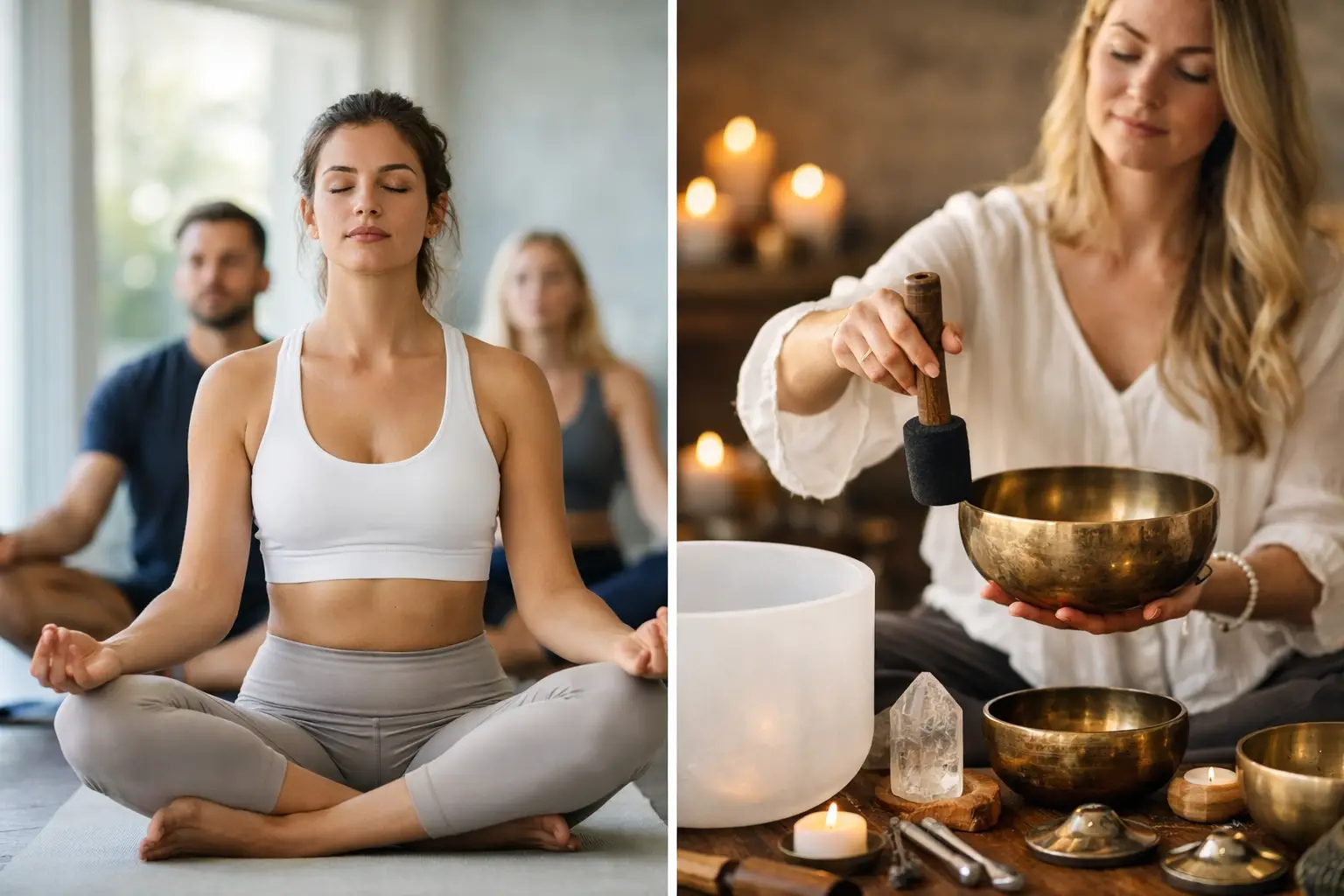
A singing bowl can soften the edges of a busy mind. A guided breath can bring someone face to face with the feeling they have spent years holding beneath it. That difference matters when you are choosing a professional path. In the conversation around breathwork training versus sound healing, the question is not which modality is more spiritual, beautiful or valuable. It is which one best matches the way you feel called to serve.
For yoga teachers, coaches, bodyworkers and conscious entrepreneurs, both can enrich a wellbeing practice. Yet they ask different things of the practitioner, create different client experiences and carry different responsibilities. Knowing the distinction helps you choose with your heart and build with clarity.
Breathwork Training Versus Sound Healing: The Core Difference
Sound healing generally uses instruments, voice, vibration and intentional rest to support relaxation, reflection and a felt sense of harmony. A practitioner may use crystal bowls, gongs, drums, chimes or vocal toning to create an immersive soundscape. The client receives. They may lie down, settle, daydream, release tension or enter a meditative state.
Facilitated breathwork is more participatory. Through conscious breathing patterns, such as circular breathing, a client actively engages their body and inner world. The breath can amplify sensation, emotion, memory and insight. Rather than simply helping someone settle, it may invite them to move through what is ready to be felt, expressed and integrated.
Neither outcome is automatically deeper or better. Some people need gentle rest before they are ready for emotional exploration. Others have already spent years collecting soothing practices and feel called towards a more active, transformational process. Your role is to understand the difference and offer the right container.
What Each Modality May Offer Your Clients
Sound healing is often accessible for people who feel depleted, overstimulated or hesitant about intensive inner work. It can be a welcoming addition to yoga classes, retreats, sacred circles and restorative sessions. The practitioner’s attention is largely on crafting a considered sensory experience: the room, the instruments, the pacing, the volume and the energetic tone.
Breathwork can offer a direct route into embodied self-awareness. Clients may experience emotional release, shifts in perspective, a sense of peace or renewed connection to themselves. In a one-to-one setting, couples session or group journey, the facilitator tracks not only the technique but the human being in front of them. They hold space for tears, laughter, resistance, tenderness and stillness without needing to fix any of it.
That is why breathwork training is not simply learning a breathing pattern. It is learning how to guide a process. You need language that does not lead or diagnose, an understanding of consent and boundaries, and the confidence to respond calmly when a client has a powerful experience.
The Training Commitment Is Different
The quality and depth of training vary widely in both fields. A sound practitioner may begin with an introductory course focused on instruments, basic theory and how to create a session. Some go on to study sound more deeply, develop a personal musical language and learn to work in therapeutic or retreat environments.
A meaningful breathwork facilitator training typically asks for more personal participation and more responsibility. Before you can safely invite others into a breath journey, you need experience of your own breath, nervous system and emotional landscape. You also need practical skill in structuring sessions, explaining what may arise, offering grounded support and closing a session in a way that helps clients return to daily life feeling orientated.
Look for training that covers more than a signature technique. Strong programmes teach contraindications, screening, consent, trauma-aware space holding, aftercare, ethical boundaries and how to adapt your guidance for individuals, couples and groups. They should also be clear about scope: a breathwork facilitator is not a replacement for a doctor, psychotherapist or crisis service.
For those drawn to a heart-led professional practice, this structure is a gift. It lets your compassion be supported by skill, rather than leaving you to improvise when someone brings grief, fear or a history of trauma into the room.
Safety Is Not a Side Note
Breath can change physiology and emotional intensity quickly. Certain health conditions, pregnancy considerations, mental health histories and medications may mean a particular style of breathwork is unsuitable or needs professional medical guidance. Responsible facilitation includes gathering relevant information beforehand, communicating clearly and knowing when to pause, modify or refer on.
Sound healing also deserves thoughtful practice. Loud or prolonged sound can feel overwhelming, and some clients may be sensitive to particular frequencies, volume or enclosed spaces. A good sound practitioner checks in, offers choice and never assumes that stillness feels safe for every nervous system.
The trade-off is simple: breathwork can create a more active and sometimes more profound emotional process, but it demands greater training in holding that process. Sound healing may be easier to introduce in a broad wellbeing setting, but it still requires care, presence and respect for each person’s needs.
Which Path Builds the Practice You Want?
If your vision is to offer calming group experiences, restorative events or a sensory layer to yoga and massage, sound healing may fit beautifully. It can complement an existing service without requiring clients to speak, share or actively process. Many practitioners love its artistry and the quiet connection it creates.
If you want to guide transformation through one-to-one sessions, couples work, workshops, retreats and circles, breathwork may be the stronger foundation. It gives you a repeatable session framework while leaving room for intuition, compassion and your own unique voice. It can also create a clear professional offering for clients who are seeking more than a moment of relaxation.
Consider your natural strengths. Do you light up when arranging atmosphere, working with sound and inviting people into rest? Or do you feel deeply called to guide conversation, breath, emotional release and integration? Your answer may be felt in your body before it is explained by your mind.
It is also possible to work with both. A sound bath can prepare a group to arrive and settle before a gentle breath practice. Sound can support the closing phase of a breathwork journey, giving clients time to rest as their experience lands. If you combine modalities, be honest about what you are leading at each stage and ensure your training supports the intensity of the session.
Professional Readiness Matters
A calling becomes a sustainable vocation when it is paired with practical readiness. Before investing in any course, ask what you will be equipped to do once you complete it. Will you know how to lead a complete session rather than only a short demonstration? Is there supervised practice or feedback? Does the course address client forms, ethics, insurance considerations and the realities of being paid for your work?
For a facilitator who wants to build a business, these questions are not less spiritual. They are an act of service. Clear processes help clients feel safe. Appropriate insurance and training support your professionalism. A defined method helps you communicate what you offer without making promises you cannot keep.
Nalu Breathwork training, for example, brings together conscious circular breathing with Hawaiian-inspired practices including Ha Breath, Wave Breath and Healing Heart Breath. The focus is not only on your personal journey, but on becoming able to hold one-to-one, couples and group sessions with confidence and care.
Choose the Modality That Lets You Serve Honestly
Do not choose breathwork because it appears more transformational, and do not choose sound healing because it appears gentler or simpler to market. Both can be deeply meaningful in the right hands. The better question is what kind of space you are willing to learn to hold.
If you choose breathwork, let your training deepen your capacity to stay present when life moves through someone. If you choose sound, let your practice be more than beautiful instruments and become an intentional invitation to rest. Your soul tribe does not need a perfect practitioner. They need a well-trained, compassionate guide who respects the power of the work and meets them with an open heart.