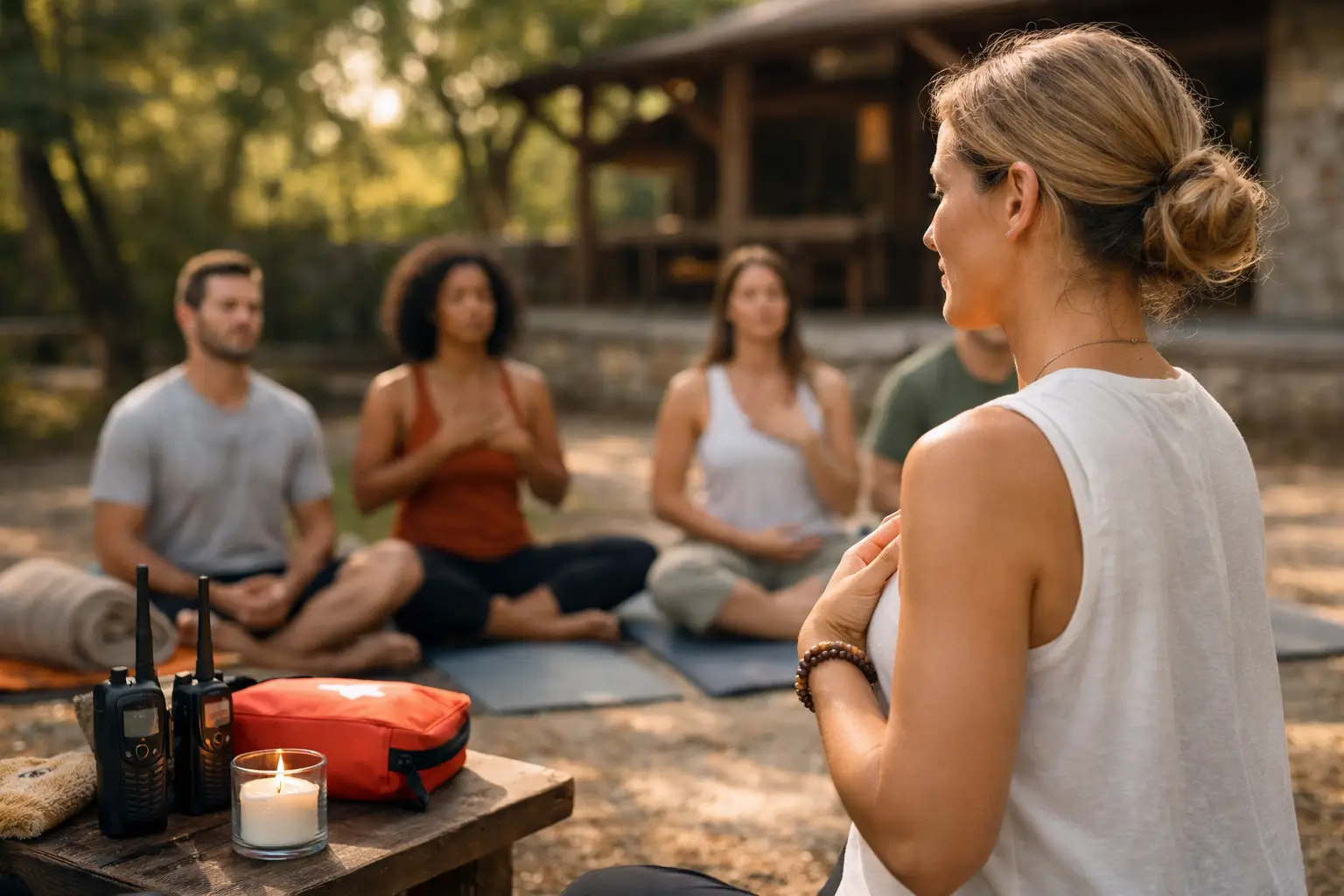
A retreat is not simply a longer breathwork session in a beautiful location. It is an intimate container where people may arrive carrying grief, stress, old stories, exhaustion, or a deep longing to feel again. So, can breathwork facilitators run retreats? Yes – when they have the training, scope, safety systems and emotional maturity to hold the experience with genuine care.
For many conscious souls, leading a retreat is a natural next step. You may already guide private clients, groups or sacred circles and feel called to create a deeper journey over a weekend or several days. That calling matters. Yet a powerful retreat is built on far more than inspiring music, nourishing meals and a stunning venue. It asks you to be a steady leader before, during and after the breathwork itself.
Can Breathwork Facilitators Run Retreats?
A certified breathwork facilitator can absolutely run paid retreats, provided they are properly qualified, insured where required, and working within the scope of their training. The quality of your certification matters because retreats create more contact time, more group dynamics and more opportunities for emotional material to surface than a single standalone session.
A facilitator training should prepare you to lead conscious circular breathing safely, understand contraindications, screen participants, recognise when someone needs additional support, and hold a group without trying to become their therapist. This distinction protects both your participants and your practice.
Your role is to guide a healing experience, not diagnose mental health conditions, promise a cure, or process trauma beyond your competence. Some participants will have profound emotional releases. Others may feel peaceful, energised or initially very little at all. A skilled facilitator makes room for each response without forcing an outcome.
At Nalu Breathwork, the path to facilitation includes practical experience in leading sessions as well as a heart-based approach to space holding. That combination is especially valuable for retreat leaders, who need both a clear method and the presence to care for the whole room.
Why Retreats Require More Than a Good Session Plan
A breathwork retreat has layers. You are responsible for the breathwork journey, but you are also shaping the rhythm of the days, the agreements within the group, the suitability of the venue and the way participants are supported between sessions.
A beautiful itinerary can become overwhelming if it is packed with back-to-back practices. Breathwork can open tender emotional spaces, and participants need time to eat, rest, walk, journal, connect quietly or simply integrate. The most memorable retreats are rarely those that offer the most activities. They are the ones where people feel held without being rushed.
There is also a practical reality: group energy changes. One participant may become highly activated, another may be withdrawn, and a third may need reassurance before they can continue. If you are leading alone, consider whether you can safely support the group while attending to an individual. For larger groups or more intensive programmes, an experienced assistant or co-facilitator is not a luxury. It can be an essential part of safe delivery.
Your retreat container begins before arrival
The retreat begins at the point of enrolment. Clear communication helps participants decide whether the experience is right for them and prevents misunderstandings later.
Your booking process should include a detailed health and wellbeing questionnaire, informed consent, clear contraindications, emergency contact details, and information about what the retreat involves. Be transparent about the type of breathing you will guide, the physical and emotional nature of the work, accommodation arrangements, cancellation terms and the support available onsite.
Screening is an act of care, not a barrier. Certain health conditions, pregnancy circumstances, recent surgery, severe mental health concerns or current medication may mean someone needs medical advice, a modified practice, one-to-one support, or a different kind of retreat altogether. When in doubt, slow down and seek appropriate professional guidance rather than hoping it will be fine on the day.
The Foundations of a Safe Breathwork Retreat
Retreat leadership is where your spiritual calling meets professional responsibility. You do not need to make the experience clinical or cold. In fact, clear boundaries often help participants relax more deeply because they know the container is trustworthy.
Start with the venue. Choose a space with enough room for participants to lie down comfortably, move safely and have privacy if they need a quieter moment. Consider access to drinking water, toilets, ventilation, first-aid supplies, mobile signal, local medical services and transport arrangements. A remote setting can be deeply restorative, but it requires stronger planning than a hotel near a town centre.
Then consider the people in the room. Set agreements early around confidentiality, consent, respectful touch, sharing space, punctuality and personal responsibility. If hands-on support is part of your method, obtain explicit consent and make it easy for participants to change their mind at any time. Consent is ongoing, not a tick box completed at check-in.
Your retreat should also have an emergency plan that your team understands. Know who will call for help, who will remain with the participant, how you will communicate with the rest of the group, and where relevant medical information is kept. You may never need the plan. Having it is part of being ready.
Insurance, permissions and professional scope
Can breathwork facilitators run retreats professionally? Yes, but certification alone is not the whole business foundation. Before you begin selling places, check that your professional indemnity and public liability insurance cover breathwork, group facilitation and residential retreats in the locations where you operate.
Requirements vary depending on where you are hosting, the venue, your business structure and whether you are offering accommodation, food, transport or additional activities. If you are serving meals, arranging excursions or taking deposits for a package, you may have further obligations. Speak to an insurer, accountant or relevant local professional rather than relying on social media advice.
Be careful with your language too. Share the potential benefits of breathwork without making medical claims. You can speak honestly about creating space for release, self-awareness, connection and stress support. Avoid suggesting that your retreat treats trauma, depression, anxiety or any other condition. Participants deserve integrity, not exaggerated promises.
Designing a Retreat That Feels Deep, Not Draining
A transformational retreat does not need to be intense from morning until night. In fact, intensity without integration can leave people feeling raw rather than resourced.
Build the schedule around a clear arc. The opening day can focus on arrival, grounding and connection. As trust grows, you may offer deeper breathwork journeys, gentle movement, reflection or sharing circles. The final day should not end abruptly after a powerful session. Allow time for integration, practical re-entry guidance and a closing ritual that honours the group without creating dependency on the retreat experience.
Think carefully about how many breathwork sessions to offer. The right number depends on the duration, the experience level of the group, the method you use and the intensity of the sessions. A weekend retreat may need fewer, more thoughtfully held journeys than a longer programme. More breathwork is not automatically more healing.
Your own capacity matters as well. Holding a retreat can be beautiful and demanding. You are likely to be the emotional anchor, timekeeper, organiser and facilitator all at once. Create support around yourself, schedule breaks, delegate practical tasks and do not underestimate the energy required after participants go to bed. A regulated facilitator helps create a regulated room.
From Facilitator to Retreat Leader
The transition from leading sessions to leading retreats is not about becoming more impressive. It is about becoming more responsible, more prepared and more attuned to the human beings who have trusted you with their time, money and inner world.
Begin with a retreat you can hold confidently. A small group, a clear theme and a well-supported venue may serve your first programme better than a large, ambitious event. Gather feedback, refine your participant journey and notice where you felt stretched. This is how your leadership grows with integrity.
Your retreat does not have to promise bliss every moment. It can offer something more valuable: a safe place for your soul tribe to breathe, feel, rest and remember their own inner wisdom. When your training, boundaries and heart are all present, a retreat becomes more than an event. It becomes a meaningful place for real change to begin.