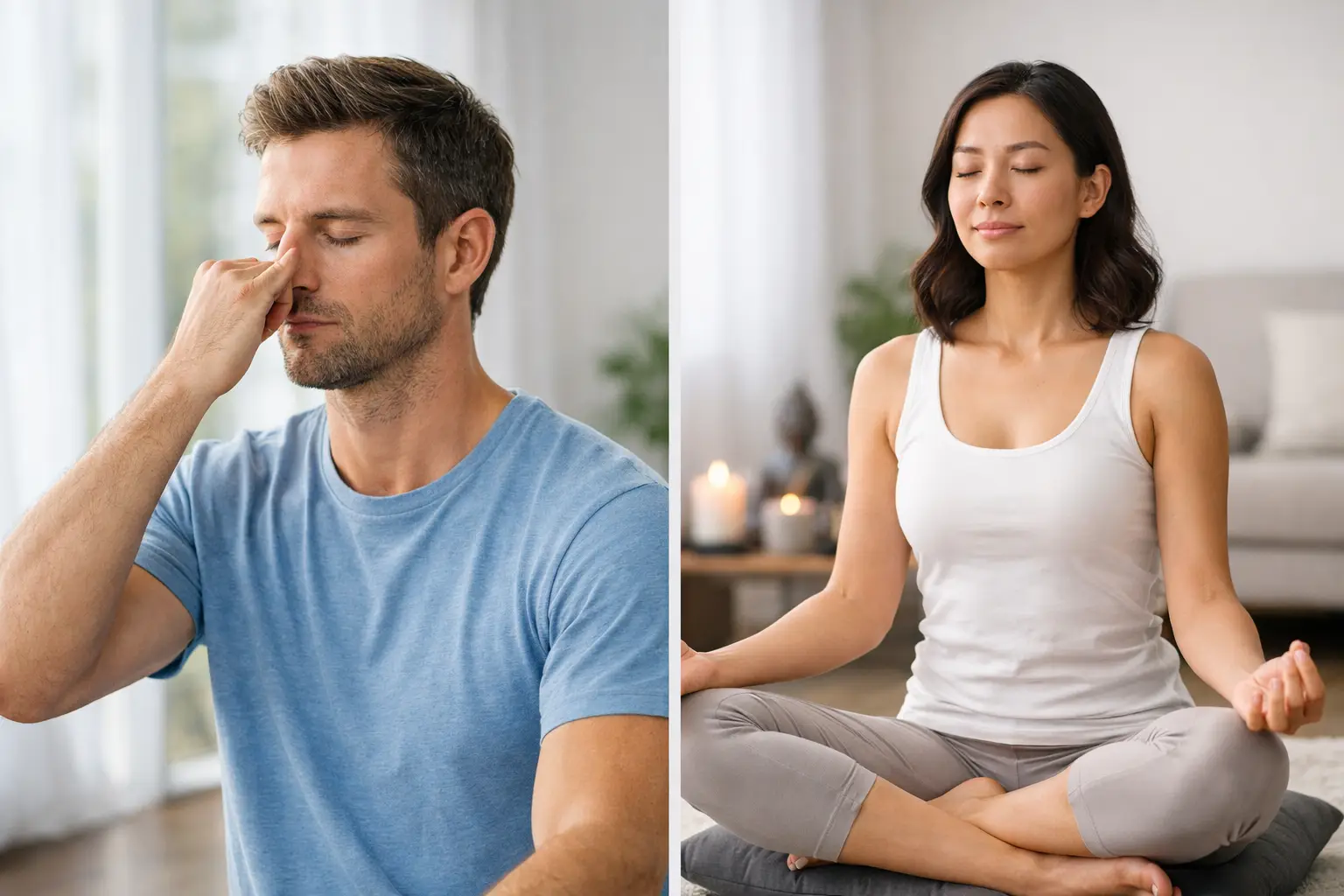
A client may arrive on your mat saying, “I know meditation is good for me, but I cannot switch my mind off.” Another may sit quietly for twenty minutes each morning, yet still feel a tight chest, a held-back grief or a nervous system that never quite settles. This is where the conversation around breathwork versus meditation becomes meaningful. They are not competing practices. They meet us through different doorways.
Meditation often teaches us to witness what is here. Conscious breathwork can invite us to move what has been held. One may cultivate steady awareness; the other may create a more active, embodied encounter with sensation, emotion and inner truth. For wellness professionals and conscious souls called to support others, understanding the distinction helps you choose the right practice – and hold it with greater care.
Breathwork versus meditation: the essential difference
Meditation is a broad family of practices that trains attention and awareness. You may focus on the breath, repeat a mantra, observe thoughts, scan the body or rest in open awareness. Although experiences differ, the central invitation is usually to notice without immediately reacting. Thoughts can come and go. Feelings can arise and pass. With practice, we learn that we are not required to follow every story the mind creates.
Breathwork is also a broad term, but it centres on intentionally changing or consciously following the breath. Some styles are slow and regulating. Others, including conscious circular breathing, are more active and can be emotionally evocative. Rather than simply noticing the breath, you work with it as a pathway into the body.
The difference is not that meditation is passive and breathwork is dramatic. Both can be gentle. Both can be profound. The more useful distinction is this: meditation generally changes your relationship with experience through awareness, while breathwork may shift your state through the breath itself.
For some people, stillness is the medicine. For others, stillness initially feels like being left alone in a noisy room. A supportive breathing practice can offer movement, rhythm and sensation – enough structure to help the mind soften its grip and allow the body to speak.
What each practice can offer
Meditation builds the capacity to stay
A consistent meditation practice can strengthen concentration, self-observation and emotional steadiness. It can be especially supportive when life feels scattered and you want to develop the ability to pause before reacting. Over time, many people find they are less fused with anxious thoughts, self-criticism or the pressure to fix everything immediately.
Meditation can also be deeply portable. A few mindful breaths before a difficult conversation, a body scan before sleep, or five minutes of seated awareness between clients can become a small but powerful return to centre.
Yet meditation is not always easy for someone carrying unprocessed stress, trauma or grief. Closing the eyes and becoming still can bring them face to face with sensations they have spent years avoiding. This does not mean meditation has failed. It means the practice may need to be shorter, more resourced, more embodied or supported by an experienced practitioner.
Breathwork invites an embodied release
Conscious breathing can help bring awareness beneath the level of thought. A fuller, connected breath may reveal tension in the jaw, belly or chest. It may invite trembling, tears, warmth, memories or a sense of spaciousness. Sometimes the session feels joyful and expansive; sometimes it is quiet, tender and incomplete. There is no correct emotional performance.
This is why breathwork can feel so transformative. It gives a person permission to feel, rather than explain, what is present. When held skilfully, the breath can support a return to the body and a renewed sense of choice.
At the same time, more activating breathwork is not a quick fix, and intensity is not proof of healing. A powerful release may be meaningful, but integration matters just as much. A person needs time to rest, hydrate, reflect and bring their experience back into daily life. The real question is not, “How big was the experience?” It is, “What changes in how I meet myself, my relationships and my life afterwards?”
Which practice is right for the moment?
If you are seeking more focus, a quieter relationship with your thoughts or a simple daily ritual, meditation may be the better starting point. It can offer a reliable anchor during a busy week and build the inner muscle of presence.
If you feel disconnected from your body, emotionally stuck or unable to access what you know intellectually, a guided breathwork session may be more supportive. The breath can create an experience that words alone cannot reach.
Often, the wisest answer is both. You might begin the day with ten minutes of meditation and use a longer breathwork session when you have the time, support and emotional capacity to go deeper. After breathwork, meditation can become a beautiful integration practice: sit, notice, and let the experience settle without needing to analyse it.
The same applies when supporting clients. A coach may use a minute of gentle, paced breathing to help a client arrive before a session. A yoga teacher may offer quiet meditation at the end of class. A trained Breathwork Facilitator may lead a dedicated session where the breath is the central modality and there is enough time for preparation, music, emotional expression, rest and integration.
Those are different containers. They deserve different levels of training and responsibility.
The facilitator’s role is more than choosing a technique
Meditation instruction can be deceptively simple: invite attention to the breath, then guide people back when their minds wander. But even this requires sensitivity. Not everyone feels safe closing their eyes, sitting still or focusing internally. Offering options – eyes open, a soft gaze, a standing posture, attention on sounds in the room – can make a practice more inclusive.
Breathwork facilitation asks for an additional depth of space-holding. A participant may encounter strong physical sensations or emotional material. They may need encouragement, grounding, permission to slow down, or simply a calm human presence that does not rush to interpret their process.
This is why a facilitator should understand consent, boundaries, contraindications, nervous system awareness and appropriate referral. Breathwork is a wellbeing modality, not a replacement for medical care, psychotherapy or crisis support. People with relevant health conditions, pregnancy considerations, a history of seizures, significant cardiovascular concerns, or acute mental health symptoms should seek individual professional guidance before taking part in an activating practice.
Safety also includes the quieter details: explaining what will happen, inviting participants to choose their own pace, never forcing catharsis, and allowing rest to be a valid outcome. A heart-centred session does not demand that anyone break open. It creates enough safety for what is true to emerge, if it is ready.
From personal practice to professional pathway
Many practitioners first meet breathwork because they want relief, clarity or healing for themselves. Then something shifts. They witness what becomes possible when someone finally exhales, feels their grief without shame, or reconnects with a part of themselves they thought was lost. They begin to feel called to share the work.
That calling deserves structure. Leading a friend through a few calming breaths is not the same as facilitating a one-to-one, couples or group breathwork journey. A professional pathway should teach not only a breathing pattern, but how to create a clear container, read the room, work ethically and integrate experiences with care.
Nalu Breathwork® training brings this together through conscious circular breathing and Hawaiian-inspired practices including Ha Breath, Wave Breath and Healing Heart Breath. For yoga teachers, coaches, bodyworkers, therapists-in-training and retreat leaders, developing these skills can become a meaningful addition to an existing practice – one that supports both genuine service and the confidence to lead paid sessions, workshops and sacred circles responsibly.
Let the practice meet the person
There is no prize for being the person who meditates perfectly, nor for having the most intense breathwork experience. Both practices ask for honesty. What do I need right now: stillness, movement, witnessing, release, connection, rest?
When you learn to listen beneath the noise, the answer may be surprisingly simple. Take the breath that feels kind. Sit for the minute you can manage. And if you feel called to hold this work for others, let devotion to healing be matched by the skill to hold every person in your care with steadiness, humility and heart.