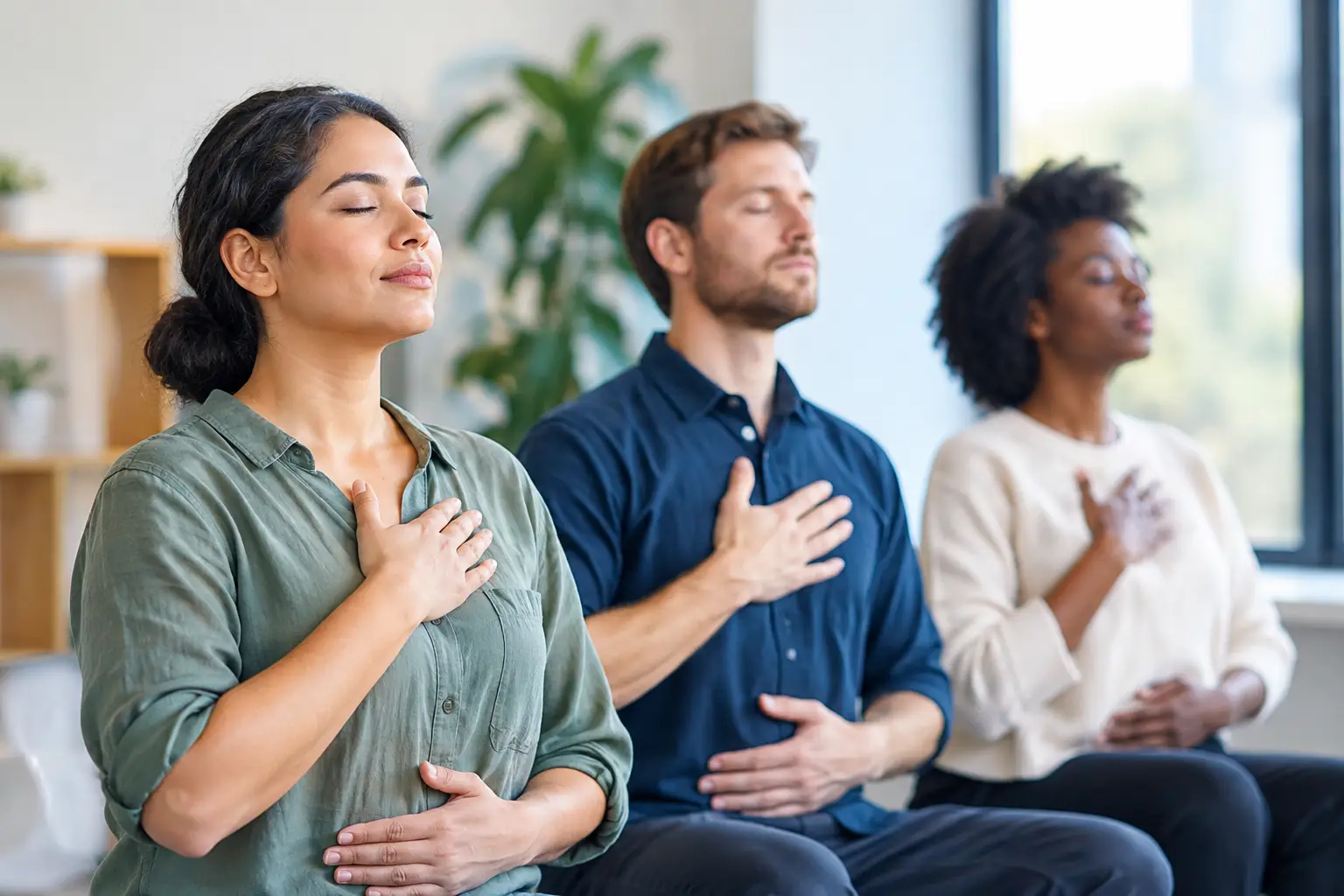
A room can be full, the music can be beautiful, and the breathing can feel powerful – yet the real measure of a workshop is what participants carry home with them. Meaningful workshop breathwork outcomes are not about creating the biggest emotional release. They are about helping people feel safely met, more connected to themselves, and able to integrate what arose long after the circle closes.
For a facilitator, this distinction changes everything. It moves breathwork beyond an inspiring experience and towards a heart-led practice that people can trust, return to and recommend.
What do meaningful workshop breathwork outcomes look like?
Outcomes will look different for every person in the room. One participant may leave with tears that finally made space for grief. Another may feel quiet, grounded and able to sleep more deeply that night. Someone else may not have a dramatic experience at all, but may recognise a pattern in how they hold their breath when life feels overwhelming.
All of these can be valuable. Conscious circular breathing can invite greater awareness of the body, emotions and inner stories, but it is not a performance and it should never be sold as a guaranteed cure. A skilfully held workshop makes room for each person’s experience without ranking it as profound, ordinary, successful or disappointing.
The outcomes that matter most often include a greater sense of inner safety, emotional permission, connection to the body, clarity around a next step, and belonging within a supportive group. In a well-held space, people may also rediscover joy, peace, softness or the confidence to speak a truth they have been carrying alone.
Release is not the only sign of transformation
There is a persistent idea that breathwork must lead to catharsis to be effective. Crying, shaking, laughter and strong sensations can arise, and they deserve compassionate support. But intensity is not the same as integration.
Sometimes the most powerful outcome is a participant choosing to slow down, place a hand on their heart and realise they have a choice. Sometimes it is leaving with more capacity to meet a difficult conversation, set a boundary or ask for support. A facilitator who understands this creates less pressure in the room and more genuine freedom.
The facilitator shapes the outcome before the first breath
Workshop results begin with preparation. Participants need clear information about what will happen, how they can care for themselves, and what choices remain available throughout the session. This is not a formality. It is how trust begins.
A grounded introduction explains the breathing practice in accessible language, invites participants to work within their own capacity, and normalises rest. It also makes clear that breathwork is a complementary wellbeing practice, not a replacement for medical, psychological or therapeutic care. People with relevant health concerns, pregnancy, recent surgery, severe mental health symptoms or a history that may make intensive breathing unsuitable should be encouraged to seek appropriate professional guidance and to choose a gentler approach where needed.
Safety is also relational. Notice who is new to group work, who appears anxious, who is moving into overwhelm, and who may need a quieter corner or a simple reminder that they can return to natural breathing at any time. Consent around touch, sharing and participation must be explicit rather than assumed.
This is where trained facilitation matters. A beautiful playlist cannot hold a nervous system. A confident facilitator can.
Workshop breathwork outcomes depend on the container
The container is the combination of intention, structure, boundaries and presence that allows a group to go inward without losing its sense of safety. It is particularly important when working with trauma, grief and stress, where an unexpected feeling or memory may surface.
Start by setting an intention that is spacious enough for each participant. Rather than promising to “release trauma” in one session, invite people to meet themselves with curiosity, compassion and honesty. This protects participants from impossible expectations and honours the reality that healing often unfolds in layers.
The arc of a workshop matters too. Participants benefit from time to arrive, settle and connect before moving into active breathing. They need clear guidance during the practice, and enough time afterwards to return to the room. Rushing straight from an emotionally charged breath journey into conversation, driving or daily responsibilities can leave people feeling exposed rather than supported.
Integration may include quiet rest, journalling, gentle movement, water, a short sharing circle or a simple invitation to name what they need next. The right choice depends on the group, the length of the workshop and what has emerged. A group of experienced retreat guests may welcome deeper reflection, while a first-time community workshop may need a lighter, more contained close.
Group connection without forced sharing
A sense of Ohana can be one of the most memorable outcomes of a breathwork workshop. Being witnessed without judgement can soften isolation and remind people that their feelings are human. But community should never become pressure to disclose.
Offer sharing as an invitation, not an expectation. Encourage participants to speak from their own experience rather than give advice or interpret someone else’s journey. A simple structure, such as sharing one word or one insight, can be enough to create connection while respecting privacy.
From personal experience to professional impact
For yoga teachers, coaches, bodyworkers, therapists-in-training and retreat leaders, workshop breathwork can become a meaningful part of a wider client offering. It gives people a direct, embodied experience rather than another conversation about what they should feel or change.
Yet professional readiness requires more than being passionate about breathwork. It asks for a clear method, competence in group dynamics, a strong understanding of scope of practice and the ability to respond calmly when someone needs extra support. It also asks facilitators to know when a 1:1 referral, therapeutic support or medical advice is the most caring next step.
A structured training pathway can help facilitators learn how to guide conscious circular breathing and work with distinct practices such as Ha Breath, Wave Breath and Healing Heart Breath. Just as importantly, it can teach them how to create workshops with a beginning, middle and end – not simply lead people through an intense experience.
When a facilitator has this foundation, they can adapt their work for intimate circles, workplace wellbeing sessions, retreat groups, festivals, couples or private clients. They can communicate clearly about what their sessions offer and build a practice that feels both soulful and professionally grounded.
How to recognise outcomes that create lasting value
The strongest feedback is not always, “That was amazing.” Listen for the quieter signs of change. A participant may say they felt safe enough to feel. They may report taking a nourishing pause before reacting to stress. They may return months later with more self-trust, or bring a friend because the workshop helped them feel less alone.
For your own learning, reflect after every event. Consider whether participants knew what to expect, whether the pace allowed for regulation, whether your instructions were clear, and whether there was sufficient integration. Notice where you felt steady and where you rushed, over-explained or tried to rescue someone’s experience.
You can also ask for feedback that goes beyond satisfaction. Invite participants to share what felt supportive, what felt unclear and what they may need after the session. This keeps your facilitation responsive without making participants responsible for your confidence.
Nalu Breathwork teaches this balance as part of the facilitator’s path: depth with discernment, heart with structure, and transformation with care. The goal is not to manufacture a breakthrough. It is to offer a space in which a person can meet their own inner wisdom safely.
When you plan your next workshop, let one question guide you: will each person leave with more choice, more connection or more compassion than they had when they arrived? If the answer is yes, you are creating something that reaches far beyond the mat.