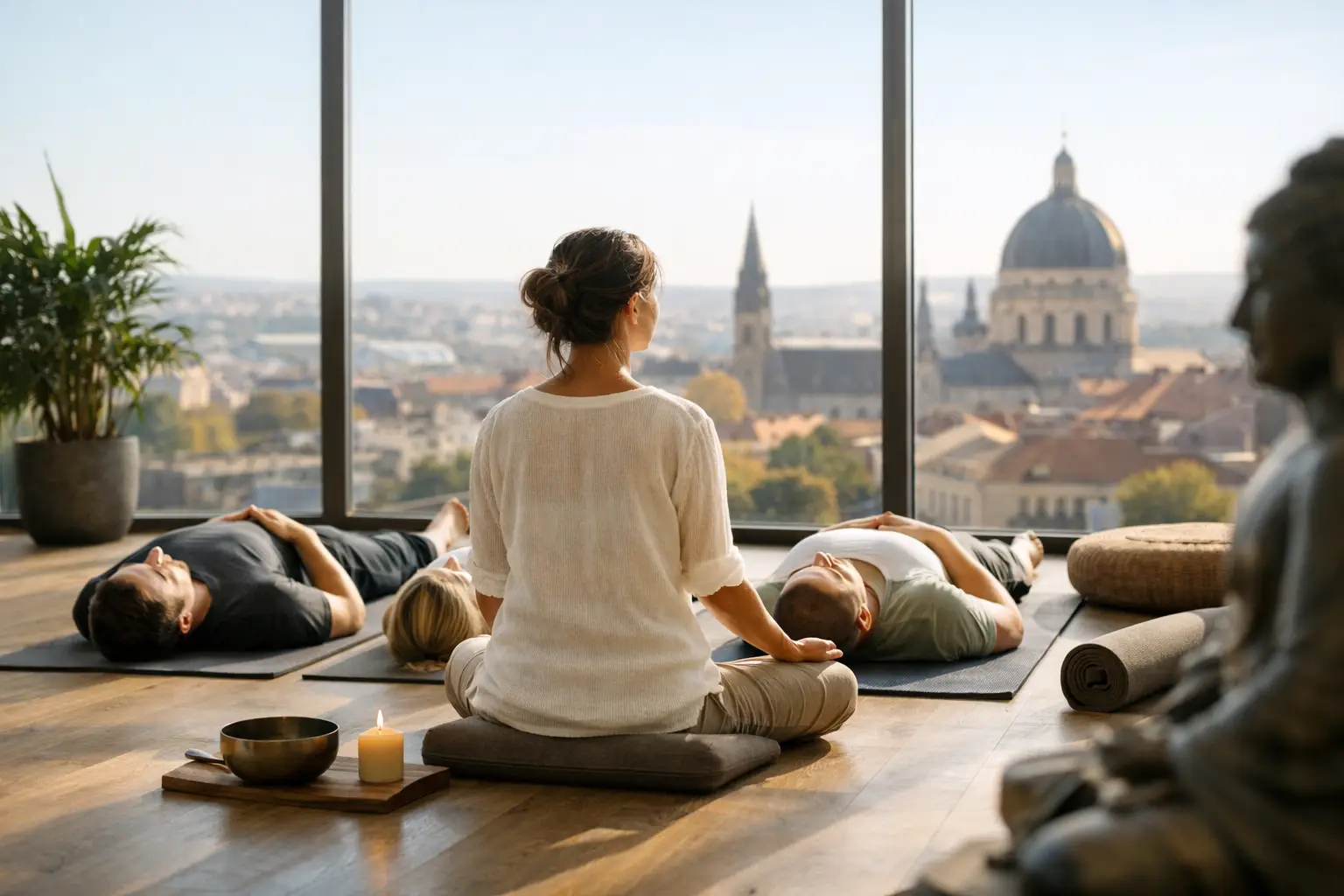
If you are searching for breathwork certification Europe, you are probably not just looking for another wellness course. You are looking for a path that feels aligned in your heart and solid in your hands – something that lets you guide real transformation safely, ethically and professionally. That matters, because breathwork can be profound, but profound work asks for proper training.
For many people in the healing space, the question is not whether breathwork works. They have already felt its power in their own body. The real question is whether a certification will genuinely prepare them to hold others through release, grief, stress, trauma responses and breakthrough moments without guessing their way through it.
Why breathwork certification in Europe needs more than a nice syllabus
Europe has no single universal governing body for breathwork, which means trainings can vary widely. Some are deeply embodied, trauma-aware and professionally structured. Others are little more than attendance certificates wrapped in beautiful language. If you want to build a practice, teach groups or support clients one-to-one, that difference is not small.
A strong training should give you more than inspiration. It should give you a clear method, repeated practice, supervision, safety frameworks and enough live experience that you are not leading from theory alone. Breathwork is not simply about creating an emotional experience. It is about knowing what to do before, during and after that experience so clients feel supported rather than exposed.
This is especially important if you are already a yoga teacher, coach, therapist, bodyworker or retreat leader. Your clients may trust you quickly because of your existing role. That trust is precious. A certification should help you meet it with skill.
What makes a breathwork certification Europe programme credible?
The first thing to look for is methodology. Can the school clearly explain the breathing style it teaches, what outcomes it is designed for, and where its approach comes from? Vague promises are common in the wellness world. Clear lineage, defined techniques and a consistent facilitation structure are much stronger signs.
The second is safety. A heart-centred training should still be grounded. That means screening, contraindications, pacing, integration and space-holding are treated as essential, not optional extras. Breath can open deep layers quickly. A facilitator must know when to encourage, when to slow things down and when a client needs referral or additional support beyond the session.
The third is practical readiness. If a programme says you will be certified, ask what that truly means. Will you know how to lead one-to-one sessions, couples sessions and group journeys? Will you understand how to price your work, structure offers and operate professionally? Can the training support you in becoming insurable and confident enough to lead paid sessions, workshops or retreat spaces?
A beautiful certificate is not the goal. Competence is.
Retreat training or online study?
This is where it depends on your learning style, life stage and budget. Retreat-based trainings can be powerful because they remove daily distractions and let you immerse fully. You experience the work in community, witness a range of breathing journeys and practise holding space in real time. For many facilitators, that embodied learning becomes the turning point.
Online self-paced training, on the other hand, can offer flexibility that makes certification possible around family, clinic hours or existing client work. It also gives you room to revisit material, absorb the philosophy slowly and build confidence step by step. For some people, this leads to better retention than a single intensive week.
The strongest option is often a programme that respects both worlds – immersive experience for embodiment, and structured coursework for depth, integration and professional development. If you are comparing schools, look beyond format alone and ask how each one helps you move from student to safe facilitator.
The role of lineage, style and spiritual fit
Not every breathwork school will feel like home to your nervous system or your values. That does not mean one is right and the others are wrong. It means style matters.
Some trainings are highly clinical. Some are overtly mystical. Some focus almost entirely on catharsis. Others are more relational, gentle or heart-led. When choosing a breathwork certification in Europe, it helps to ask yourself what sort of facilitator you want to become.
Do you want a modality that sits naturally alongside coaching, yoga, somatic work or retreats? Do you want to work with emotional release in a way that feels spiritually grounded but still responsible? Do you want a framework that honours both transformation and tenderness?
A lineage-driven method can bring real depth here. When a school knows its roots and can articulate why it teaches the way it teaches, students often leave with more coherence and confidence. That sense of integrity shows up in the room. Clients can feel it.
Questions worth asking before you enrol
Before committing, read beyond the sales page and listen for what is not being said. Ask how much supervised practice is included. Ask whether assessment is based on participation alone or on demonstrated skill. Ask how the school teaches facilitation for different settings, because a private session is very different from a room full of festival attendees.
You may also want to ask what kind of aftercare and integration are taught. Intense experiences can be memorable, but they are not the same as lasting change. Good facilitators know how to support the days after the breath as much as the peak of the session itself.
If your intention is to make breathwork part of your business, ask direct questions about professional application. Can graduates realistically begin offering paid sessions? Is there guidance around insurance, scope of practice and ethical client care? A school that prepares people for real-world facilitation should be able to answer these clearly.
Who breathwork certification is really for
There is a quiet myth that you must already be highly experienced in healing work before you train. Sometimes that is true for advanced pathways, but not always. Many excellent facilitators begin with a strong calling, a willingness to do their own inner work and a sincere desire to serve.
That said, breathwork training is not simply a business opportunity. If your only goal is to add another service to a menu, you may choose too quickly and train too lightly. The best facilitators are usually people who respect the breath as both a healing art and a responsibility.
For wellness professionals, certification can become a natural extension of existing work. A yoga teacher may use it to deepen retreats. A coach may bring breath into transformational programmes. A bodyworker may integrate it into nervous system support. A therapist or therapist-in-training may value a more embodied companion modality, while staying clear about boundaries and scope.
For purpose-led souls changing direction in life, it can also become a new vocation. But the key word is vocation. Breathwork asks for presence, maturity and humility as much as passion.
Choosing a programme that helps you lead with confidence
Confidence in facilitation does not come from memorising a script. It comes from practice, feedback and learning how to stay steady when someone cries, shakes, resists, softens or drops into silence. A worthwhile certification helps you build that steadiness.
It should also help you find your own voice. Good training is not about creating copies of one teacher. It is about giving you a safe structure strong enough to hold your individuality. That is especially valuable if you dream of leading your own circles, workshops or retreats across the UK and Europe.
This is one reason some people are drawn to trainings such as Nalu Breathwork, where the method is heart-led, lineage-informed and designed with professional application in mind. The blend matters. Students are not only learning techniques such as conscious circular breathing, but also how to hold sessions with depth, care and clear intention.
Breathwork certification Europe: the deeper choice
At first glance, choosing a training can seem like a practical decision about dates, cost and location. Those things matter, of course. Yet underneath them is a more personal question: who will you become through the training itself?
The right course will stretch you. It will ask you to meet your own breath honestly before you guide anyone else. It will teach you that safety is loving, that structure creates freedom, and that holding space is not about performance. It is about presence.
If you feel called towards breathwork certification Europe, trust the call, but let discernment walk beside it. Look for a programme that nourishes your spirit, sharpens your skill and prepares you to serve people well. When those three come together, certification becomes more than a qualification. It becomes the beginning of work that can change lives – including your own.
And if you are choosing slowly, that is not hesitation. Sometimes it is wisdom, making sure the path you step onto is one you can walk with an open heart and steady hands.