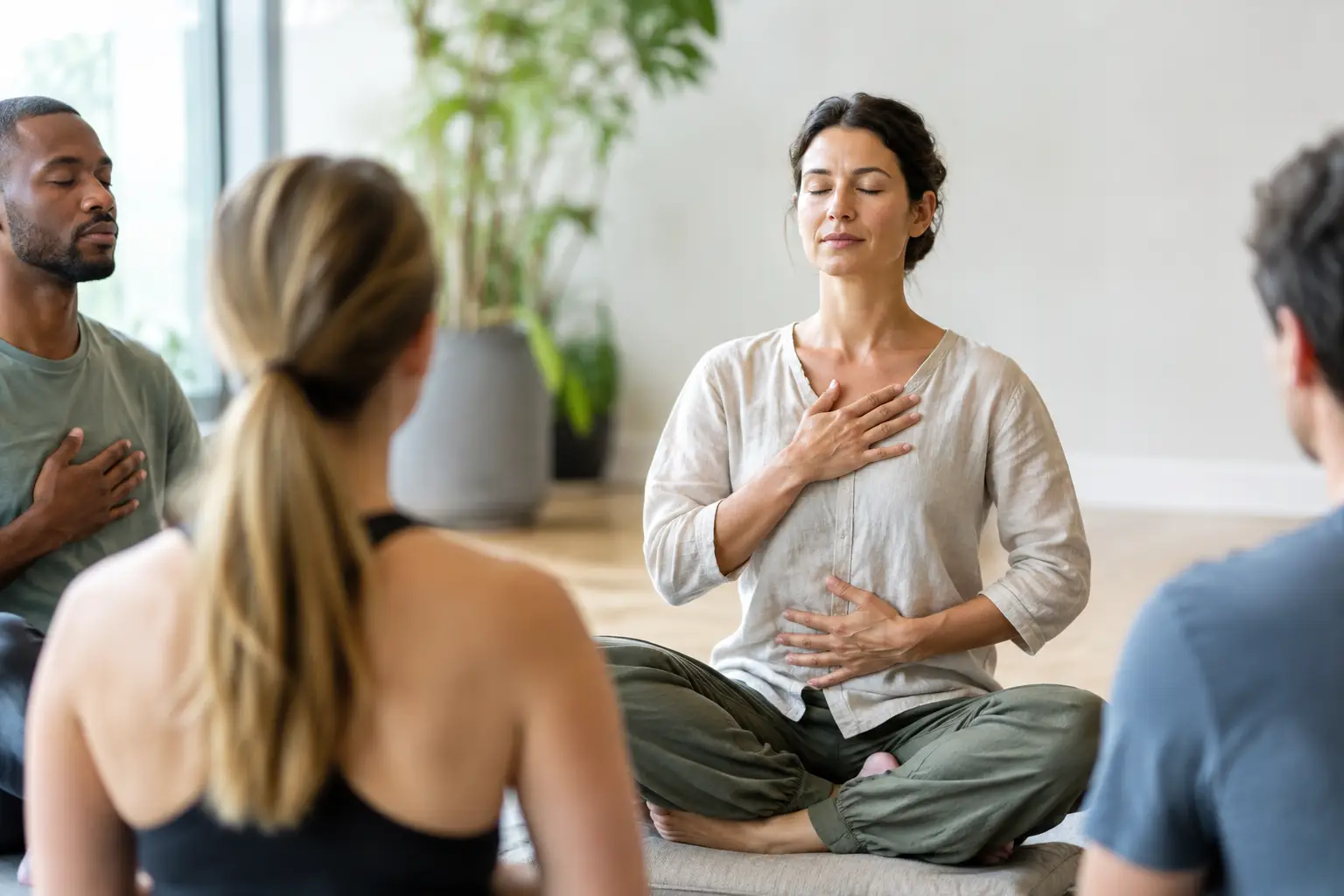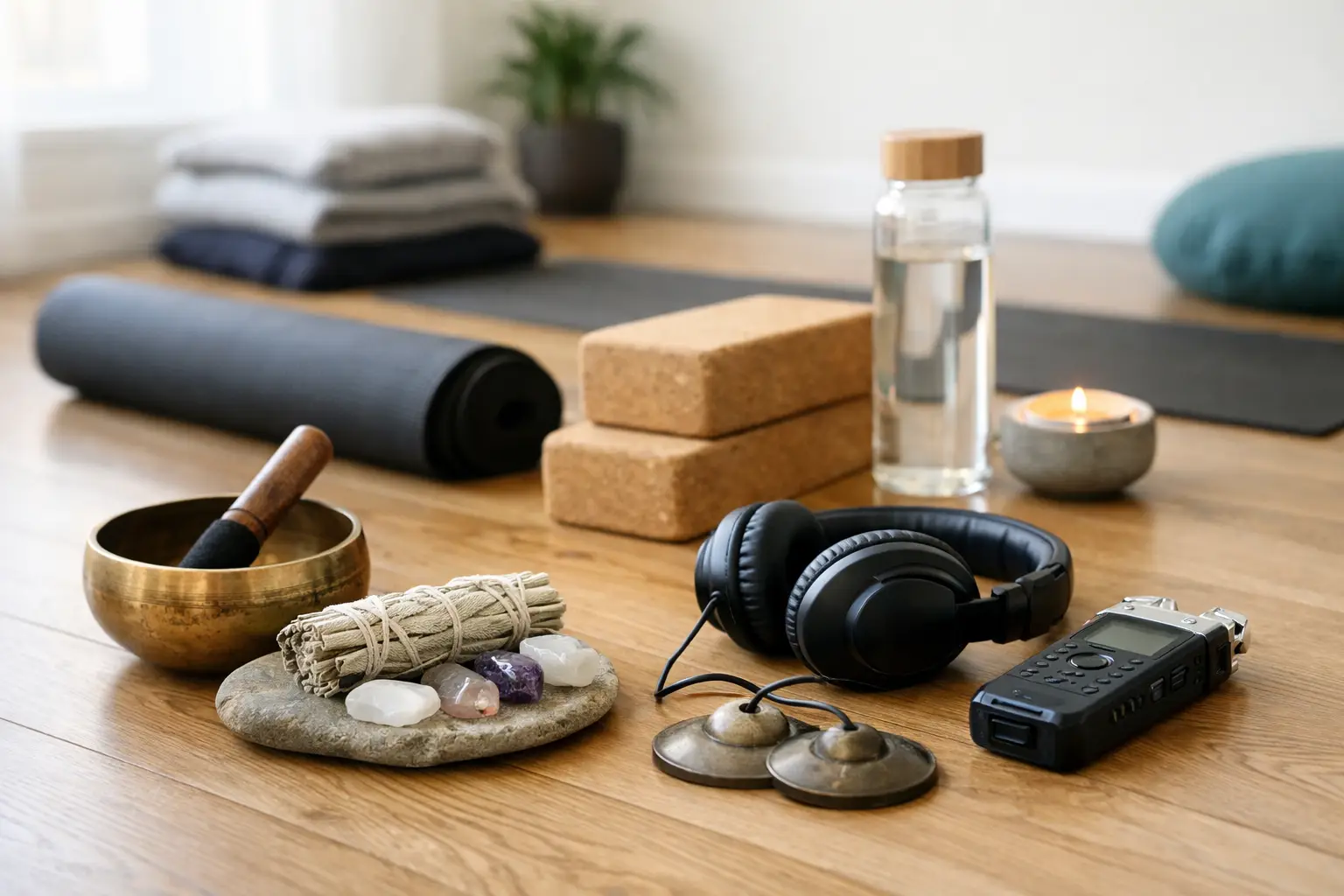
A powerful breathwork session is not created by filling a room with beautiful objects. It is created when a participant feels safe enough to soften, breathe and meet what is ready to be felt. The right essential breathwork facilitator equipment supports that experience quietly: it helps you hold a steady, welcoming container while keeping your attention where it belongs – on the people in your care.
Whether you are preparing to lead one-to-one sessions, couples, sacred circles or larger workshops, begin with the foundations. Your equipment should serve safety, comfort, clear communication and integration. Everything else is optional.
Essential breathwork facilitator equipment for a safe space
Your first investment is not a ceremonial gong or a room full of props. It is a clean, calm and functional session space. Participants need enough room to lie down comfortably, extend their arms if needed and move gently without bumping into another person. For groups, leave clear pathways to every mat so that you can reach someone quickly and so participants can step out for water, fresh air or the loo without disruption.
A quality yoga mat for each participant is a practical starting point. Choose mats that are supportive, easy to clean and sufficiently grippy. If you regularly travel to workshops, lighter mats may be sensible. For a permanent studio, thicker and more durable mats often offer better long-term value.
Add blankets, bolsters and cushions. Conscious circular breathing can bring up strong physical sensations, temperature changes and emotional release. A blanket can help someone feel contained and warm; a bolster under the knees can ease pressure in the lower back; a cushion can support a seated arrival or integration circle. Keep a few extra blankets nearby, because one person may feel perfectly warm while another feels chilled.
Comfort is not a luxury in this work. When the body is supported, a participant has more capacity to stay present with their inner experience.
Cleanliness, water and small practical comforts
Have tissues within easy reach, a bin with a lid, hand sanitiser and a simple cleaning routine for mats and props between sessions. These details communicate care before you say a word. If you offer eye pillows, make sure they have removable washable covers or provide a clean personal barrier for each person.
Fresh drinking water and cups are helpful, particularly after an emotional session. Avoid presenting water as a solution for everything, but offer it with ease. You may also want a small basket of spare hair ties, as loose hair can become distracting during a lying-down practice.
Sound equipment that supports rather than overwhelms
Music can guide the emotional arc of a breathwork journey. It can create momentum, soften the edges of silence and support the transition from activation into rest. Yet music is a companion, not the facilitator.
For one-to-one work, a good-quality portable speaker may be all you need. In larger rooms, invest in a dependable speaker with enough power to fill the space without distortion. Test it before participants arrive, including at the farthest point in the room. A playlist that sounds gentle beside the speaker can feel tinny, loud or unclear at the back.
Keep your phone or music device charged, place it on flight mode, and bring a charging cable or power bank. Have a back-up playlist downloaded rather than relying on Wi-Fi. Technology can fail, and a calm facilitator is more valuable than a perfect soundtrack.
Consider the room itself too. In a busy venue, a white-noise machine or fan may soften intermittent external sound. In a quiet room, silence may be the most potent choice during certain moments. Let the method, the group and your own discernment lead.
If you facilitate groups, a small headset microphone can protect your voice and help participants receive clear guidance without you raising your volume. This matters especially when music is playing or breath is audible throughout the room. Your voice should feel close, steady and invitational, never forced.
Safety tools belong in every facilitator kit
Breathwork is heart-led, but heart-led does not mean unprepared. Before any session, complete an appropriate health screening, explain contraindications clearly and obtain informed consent. Keep printed copies if you work offline, or ensure secure digital forms are available before a participant enters the room.
Your kit should include a fully stocked first-aid box, your phone, a charged power bank, the full venue address and a clear plan for contacting emergency services. If you work from a hired venue, identify exits, toilets, the nearest entrance and any relevant building procedures before your group arrives.
It is also wise to keep a facilitator folder or secure digital record containing emergency contacts, participant declarations and your session notes where appropriate. Protect confidentiality carefully. Personal shares, health information and emotional experiences deserve respectful handling.
For clients who may become overwhelmed, grounding options are more useful than elaborate accessories. A weighted blanket, a firm cushion, a cool flannel, a chair nearby and access to fresh air can all support regulation. Most importantly, your presence, pacing and language are the real safety tools. Equipment cannot replace sound training in screening, consent, trauma-aware facilitation and knowing when to pause, modify or refer onward.
Build a facilitator kit around the sessions you lead
The equipment you need depends on the kind of practice you are building. A facilitator offering intimate sessions in a therapy room needs portability, privacy and simple comfort. Someone leading festival sessions needs a compact kit, clear signage, battery-powered sound and the ability to adapt to noise, weather and changing group numbers. Retreat leaders may need more blankets, extra mats and a system for laundering props between sessions.
For couples work, consider whether you have enough space for each person to be fully comfortable while still allowing connection where it is welcomed. For group work, create a clear visual layout before anyone arrives. Arrange mats in a circle when community and shared energy are central, or give more space between mats when privacy and personal process need greater emphasis.
A small altar, flowers, shells, candles or meaningful objects can create beauty and intention. Use them with discernment. Battery-operated candles are often safer in hired spaces, and strong scents may not suit everyone. Aesthetic choices should never become a substitute for a well-held container, but they can help a room feel cared for.
The equipment people cannot see
Some of the most essential resources will never sit in a basket. Your intake process, session plan, timing device, boundaries, insurance and post-session integration guidance are all part of your professional equipment.
A visible clock or discreet timer helps you manage the journey without constantly checking your phone. Keep a notebook for private facilitator reflections after a session, not for recording intimate details unnecessarily. Over time, these reflections can show you where your language is landing, how your pacing is evolving and which practical items genuinely support your work.
Have a clear closing practice ready. After deep breathing, people may need time to orient, sit up slowly, drink water, journal or simply be quiet. Provide pens and plain paper if journalling suits your style, but do not make it compulsory. Integration is personal, and silence can be deeply nourishing.
Professional readiness also means being honest about your scope. Breathwork facilitation can complement therapeutic and wellbeing support, but it is not a replacement for medical, psychiatric or psychological care. Know your referral pathways and communicate them with warmth and clarity.
Choose less, practise more
When you are newly qualified, it is tempting to believe that more equipment will make you feel more prepared. Often, the opposite is true. A familiar, well-organised kit allows you to arrive grounded, set up with ease and meet the unexpected without losing connection to the room.
At Nalu Breathwork, facilitators are taught that the breath is a profound doorway to healing, release and reconnection. Your role is to honour that doorway with skill, humility and care. Start with clean, supportive essentials, learn how each item serves the experience, and let your confidence grow through practice.
The most memorable part of a session will not be the speaker, blanket or altar. It will be the moment someone realises they can stay with themselves, breathe through what is present and leave feeling a little more whole.