You can understand a breathwork sequence on a screen, then discover that holding space for a client’s tears, resistance or breakthrough asks something deeper of you. That is the real question behind retreat learning versus online coursework. It is not simply about where you study. It is about how you want to grow into the steady, skilled and heart-led facilitator your future clients can trust.
For yoga teachers, coaches, therapists, bodyworkers and conscious entrepreneurs, both paths can lead towards meaningful professional training. The right choice depends on your life, your learning style, your current confidence and the kind of support you need as you step into this healing art.
What a breathwork retreat gives you that a screen cannot
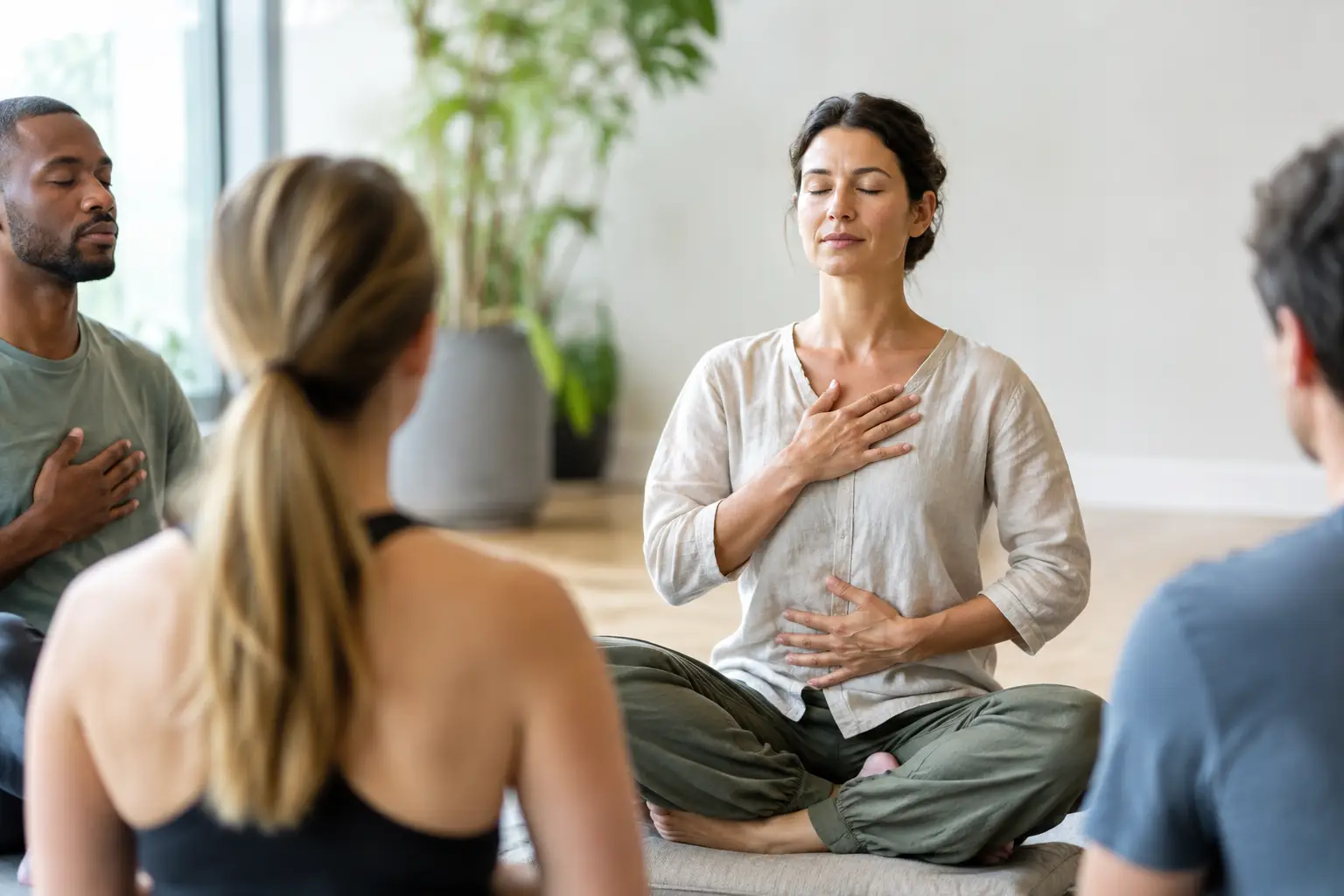
An in-person training retreat creates protected space away from daily responsibilities. There are no school runs, client calls, washing piles or familiar routines competing for your attention. You arrive as you are, then give yourself permission to be fully present with the breath, the learning and the people around you.
That immersion matters in facilitator training. Conscious circular breathing is not only a methodology to memorise. It is an embodied experience. Before you can guide another person through emotional release, grief, stress or a profound inner shift, you need to meet your own breath with honesty and compassion.
On retreat, you practise in real time. You feel the difference between explaining a technique and guiding it. You observe how tone of voice, pacing, music, touch where appropriate and your own grounded presence can influence a session. You receive immediate feedback from trainers and peers, then try again while the learning is still alive in your body.
Practice builds the confidence to hold space
A strong retreat environment makes room for the elements that can feel difficult to simulate alone: reading a group’s energy, responding calmly when someone becomes emotional, setting clear boundaries and bringing people back to safety when needed. These are not performance skills. They are the foundations of responsible facilitation.
You also learn beside an Ohana of people who understand why this work calls to you. The conversations over meals, the shared reflections and the quiet moments after a powerful session can become part of the training itself. Many facilitators find that this sense of belonging softens self-doubt. You are not building a practice in isolation.
For someone who is craving personal transformation as well as professional readiness, a retreat can offer a potent reset. The distance from ordinary life can help you hear what is next with greater clarity.
Where online coursework shines
Online self-paced coursework serves a different, equally valuable purpose. It brings a structured learning pathway into the reality of your current life. If you are balancing a practice, employment, caring responsibilities or travel, the ability to learn in your own time can make certification feel genuinely possible rather than like another impossible commitment.
You can pause a lesson, revisit the details of a breathing pattern and take notes when your mind is fresh. This is particularly helpful when learning the language of facilitation, session structure, preparation, integration and the distinct approaches within a breathwork method. Repetition can be a gift. It gives the material time to settle.
Online training can also be a more accessible starting point for people who feel called to breathwork but are not ready to travel or take several days away. Rather than waiting for the perfect moment, you can begin building knowledge and personal practice now.
Flexibility requires self-leadership
The freedom of online study asks for honesty. Will you create protected time each week? Will you complete the practical components rather than only watching the lessons? Will you seek feedback, practise consistently and stay present when the material touches something tender in your own life?
Self-paced does not mean passive. The most meaningful online students treat their training as a commitment to their future clients and their future practice. They schedule study time, practise the breath regularly and let their own lived experience inform how they learn to guide others.
If you are already comfortable with independent study, have a calm place to practise and can sustain momentum without a fixed group timetable, online coursework may suit you beautifully. It can meet you where you are while still giving you a clear pathway forwards.
Retreat learning versus online coursework: ask these questions
There is no morally superior route. Choosing a retreat does not mean you are more devoted, and choosing online coursework does not mean you are taking an easier option. Each format supports a different season of life.
A retreat may be the right fit if you learn through direct experience, want close live guidance or feel that stepping away from routine would support a personal and professional shift. It may also suit you if you want to practise with others and gain confidence holding 1:1, couples and group sessions in an immersive setting.
Online coursework may be a wiser choice if flexibility is essential, travel is not practical or you prefer to absorb learning slowly. It can be especially supportive if you are already serving clients and want to integrate each lesson thoughtfully into the work you do.
Consider what you are genuinely seeking. Is it a deep personal opening? A clear structure for a new offering? More confidence with safety and space-holding? Community? A practical route towards running paid sessions, workshops, sacred circles, festivals or retreats? Your answer will point you towards the format that can serve you best.
Professional readiness is more than completing lessons
Whether you train in person or online, certification should be about more than reaching the final module. A facilitator carries real responsibility. People may arrive carrying stress, old grief, relationship pain or experiences they have never had language for. They deserve a guide who understands the method, respects the limits of their role and knows how to create a compassionate, well-held container.
Look for training that gives you a clear framework for sessions, practical guidance on working with different formats and a strong emphasis on safety. You should know how to prepare participants, communicate expectations, support integration and recognise when a person needs additional professional care beyond breathwork.
It is also reasonable to consider your professional pathway. If your vision includes offering paid breathwork sessions, collaborating with wellness venues or creating your own events, choose a course that addresses the real-world side of facilitation. Clarity around certification, insurance eligibility and the scope of what you can offer helps turn a heartfelt calling into a sustainable practice.
Nalu Breathwork® approaches this balance through heart-based training that honours the transformational potential of the breath while helping facilitators develop grounded, practical competence. The goal is not to create identical teachers. It is to help each person bring their own integrity, presence and gifts to the work.
You may not have to choose only one path
For many conscious souls, the strongest route is not strictly retreat or online. It is a rhythm of both. Online learning can establish language, theory and consistent personal practice. A retreat can then deepen embodiment, live facilitation and connection. Or you may attend a retreat first, then appreciate the chance to revisit and integrate material at your own pace afterwards.
Think of your education as a relationship rather than a finish line. The breath continues to teach you each time you sit with yourself and each time you hold space for another human being. Your confidence grows through study, yes, but also through humble practice, reflection and the willingness to keep learning.
Choose the environment that helps you show up fully
The best training format is the one you can truly commit to, not the one that looks most impressive from the outside. If your soul is asking for immersion, community and live practice, honour that call. If your life needs flexibility, steadiness and time to integrate, honour that too.
Choose the path that leaves you more able to meet another person with calm eyes, an open heart and skilful hands. That is where your breathwork journey becomes more than a qualification. It becomes a way of helping others remember their own capacity for peace, freedom and healing.