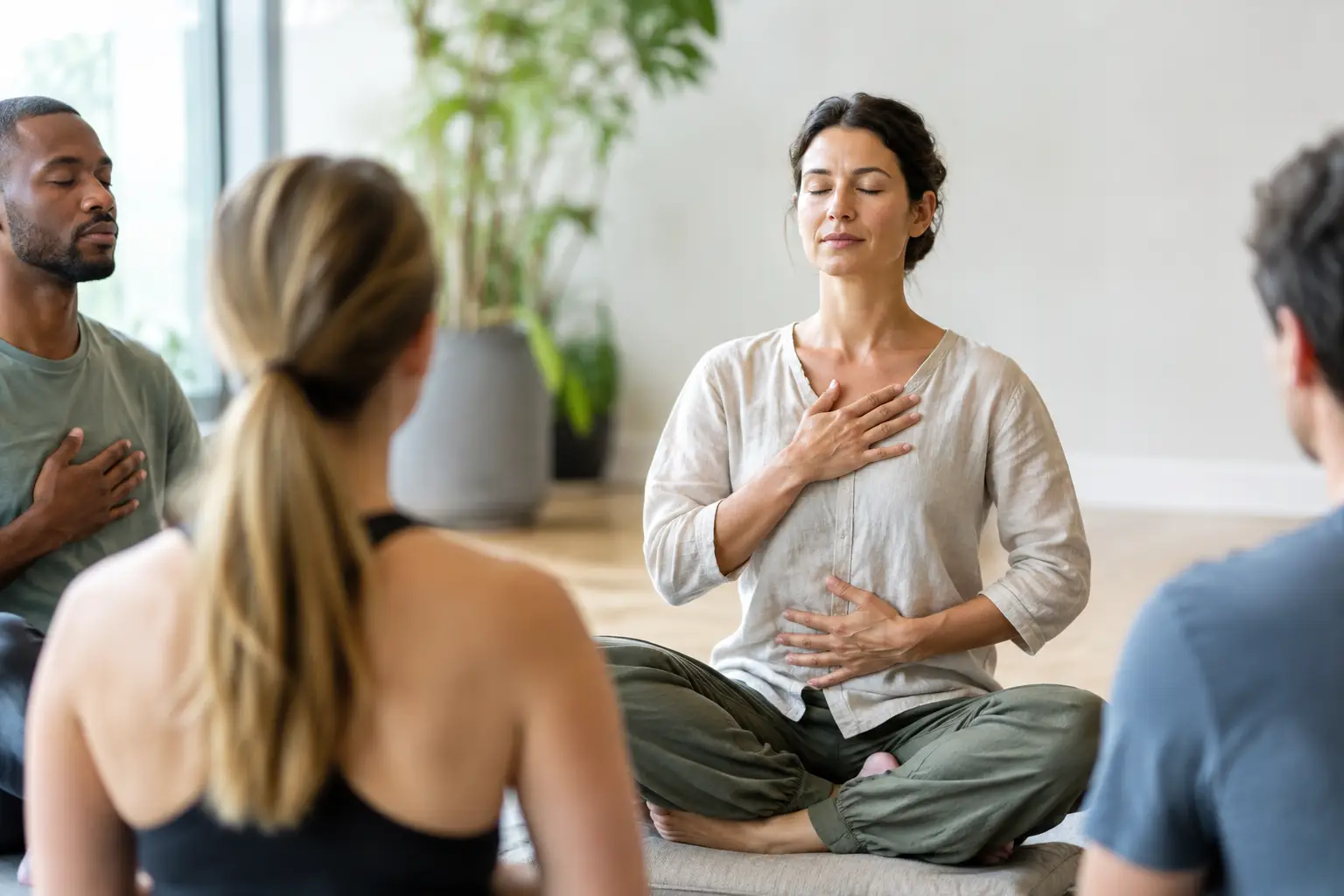
A full room is not the same as a connected room. You can host a beautiful breathwork circle, play the perfect playlist and welcome twenty people through the door, yet still leave everyone feeling like strangers. Knowing how to build a wellness community means creating something deeper: a place where people feel safe enough to be seen, supported enough to return, and inspired enough to contribute.
For facilitators, coaches, yoga teachers and healing practitioners, community is not simply a marketing strategy. It is part of the medicine. The relationships around your work can help people stay connected to their intentions long after a powerful session has ended. They can also give your practice the steady foundation it needs to grow with integrity.
Start with a shared purpose, not a crowded calendar
A wellness community needs a clear reason to exist. People may arrive because they are stressed, grieving, curious about conscious breathing or looking for their soul tribe. What helps them stay is a shared sense of purpose.
Get specific about the transformation you want your space to support. Perhaps your community is for people ready to soften out of survival mode and reconnect with their bodies. Perhaps it serves practitioners who want to develop the confidence to hold emotionally meaningful sessions. Perhaps it is a local gathering place for people who value presence, honest conversation and heart-led healing.
This purpose should shape your invitations, your gatherings and your boundaries. It does not need to exclude everyone who is different, but it should give people a feeling of recognition: “This is a space for me.” A broad promise such as “wellbeing for everyone” can be welcoming, yet it can also make it difficult to create depth. A clearer intention creates belonging.
Before planning your next event, write one sentence that completes this thought: “We gather to…” Let it be human and plain. That sentence becomes a compass when opportunities, collaborations and new ideas compete for your attention.
How to build a wellness community through trust
Trust is built in small, repeated moments. It is created when you begin on time, communicate clearly, remember a person’s name and follow through when you say you will. In healing spaces, those details matter even more because people may arrive carrying experiences they do not share out loud.
Set expectations before people attend. Explain what the session involves, who it is suitable for and what they can choose for themselves. Let people know they are always in charge of their own participation. A powerful wellness space should invite exploration, not demand disclosure, catharsis or a particular emotional outcome.
This is especially essential with breathwork. Conscious circular breathing can bring strong physical sensations and emotions to the surface, and a responsible facilitator does not present it as a cure-all. Use clear health screening, informed consent and grounded contraindication guidance. Know the limits of your training and scope of practice. When someone needs medical, mental health or crisis support, referral is a caring act, not a failure of your community.
Confidentiality is another cornerstone. You may encourage people to share their own experience, but never create a culture where personal stories become group property. State this at the beginning of a circle and model it yourself. The safest communities are not those where everyone shares everything. They are those where every person has genuine choice.
Create rituals people can rely on
Community grows through rhythm. One spectacular retreat can open hearts, but regular contact is what turns a meaningful experience into relationship. You do not need to offer something every day. In fact, overcommitting can drain the very energy you want to bring to your people.
Choose a rhythm you can sustain. That might be a monthly in-person breathwork circle, a fortnightly online integration gathering or a seasonal half-day workshop. Consistency matters more than frequency. When people know where and when they can reconnect, it becomes easier for them to make your space part of their lives.
Simple rituals give gatherings a recognisable heart. You might open with a check-in, invite a few moments of arrival through the breath, close with quiet integration and offer an optional chance to connect afterwards. Keep the structure steady enough to create safety, while allowing the theme and energy of each gathering to stay alive.
Do not mistake ritual for rigidity. A group of experienced practitioners may enjoy more spacious sharing, while newcomers often need clearer guidance. Listen to who is in the room. The best structure is the one that helps people feel held without feeling controlled.
Design for participation, not passive consumption
People build attachment to a community when they have a meaningful place within it. If every gathering is a performance delivered by one expert to an audience, members may appreciate the experience but remain disconnected from one another.
Make room for gentle participation. Invite paired reflections after a practice, small group conversations or a voluntary moment to share an insight. Offer ways people can contribute that do not require them to become the loudest voice in the room. One person may be happy welcoming newcomers, another may help set up the space, and someone else may have a gift for bringing people together after the session.
Be careful not to turn participation into pressure. Introverts, people in grief and those new to wellness spaces may need time before they speak. Belonging should never depend on visibility. A warm greeting, a comfortable seat and permission to simply receive can be deeply inclusive.
As the community develops, consider inviting trusted members to co-create. They might lead a short grounding practice, suggest a theme or host an informal meet-up. This builds shared ownership while allowing you to remain responsible for the quality and safety of the container.
Welcome the whole person, not just their healing journey
Wellness communities can become intense when every conversation centres on what needs fixing. Healing matters, but so do laughter, friendship, creativity and ordinary human connection. Give people permission to be more than their pain or their personal growth project.
A post-session cup of tea, a walk by the sea, a community meal or a celebration of someone’s new venture can deepen connection in ways that a formal circle cannot. These moments are not distractions from the work. They help people experience joy, ease and mutual care alongside reflection.
At the same time, clear boundaries protect the group from becoming overly dependent on you or on one another. You are building community, not positioning yourself as the sole source of wisdom. Encourage people to develop support networks beyond your gatherings, and avoid creating an atmosphere where constant processing is mistaken for progress.
Lead with professional skill and a warm heart
Heart-centred facilitation is not the opposite of professionalism. Your warmth becomes more trustworthy when it is supported by skill, preparation and strong ethical practice. This is particularly true if you want to lead paid sessions, workshops, retreats or larger festival spaces.
Invest in training that teaches more than a sequence of techniques. You need to understand how to prepare a space, read group energy, offer modifications, respond to emotional release and close a session with care. You also need practical foundations such as screening, insurance requirements, client communication and the confidence to say no when a request is outside your scope.
Nalu Breathwork’s facilitator pathway is rooted in this balance: heart-led breathing practices alongside the competence to hold one-to-one, couples and group sessions responsibly. Whatever approach you choose, let your qualifications match the depth of work you are inviting people into.
Let your community grow at the pace of care
Growth can be exciting. More bookings, bigger rooms and collaborative invitations can signal that your message is landing. Yet expansion asks new questions. Can you still greet people personally? Is the venue suitable? Do you have enough support if several participants need attention at once? Are your values staying visible as the group becomes more diverse?
Sometimes the most aligned choice is to keep a circle small, add a second date or bring in a trained assistant rather than crowding more people into one room. There is no single ideal size. An intimate group may offer depth and trust, while a larger gathering can create collective energy and reach people who would not otherwise find you. It depends on your purpose, experience and capacity to hold the space well.
Invite feedback regularly, but do not hand over your vision entirely. Ask what helped people feel welcome, what could be clearer and what they would like more of. Then discern what serves the community as a whole. Leadership means listening with an open heart while remaining anchored in your purpose.
The community you are here to create does not need to be perfect or enormous. Begin with a well-held room, one honest invitation and a rhythm you can honour. When people leave feeling more connected to themselves and kinder towards one another, they will carry the spirit of your Ohana far beyond the circle.